••
Human Rights Concerns Deepen in West Africa as Ghana Rescues Hundreds of Children and NGOs Demand Justice in Guinea
•3 min read•5 sources
Human rights advocates and security services across West Africa have intensified their efforts to combat exploitation and seek justice following several high-profile incidents. In Ghana, the Ghana Immigration Service (GIS) and civil society organizations have successfully rescued hundreds of vulnerable individuals from trafficking networks. Meanwhile, in Guinea, a coalition of non-governmental organizations is demanding transparency and a formal investigation into the discovery of a mass grave, highlighting a regional surge in human rights challenges and the urgent need for systemic intervention.
On August 29, 2026, the Ghana Immigration Service conducted a large-scale operation across the Greater Accra and Ashanti regions, apprehending over 1,055 individuals linked to exploitative street-begging networks. The operation resulted in the rescue of 662 children, 248 women, and 145 men who were being used in trafficking schemes. Security officials identified key hotspots in the Kumasi Metropolis and Accra, where victims—many of whom are West African nationals—were being coerced into begging. During the exercise, the GIS provided emergency medical care to a Nigerien woman in labor and urged the public to stop giving alms directly to street beggars, as this financial support often inadvertently fuels the trafficking trade.
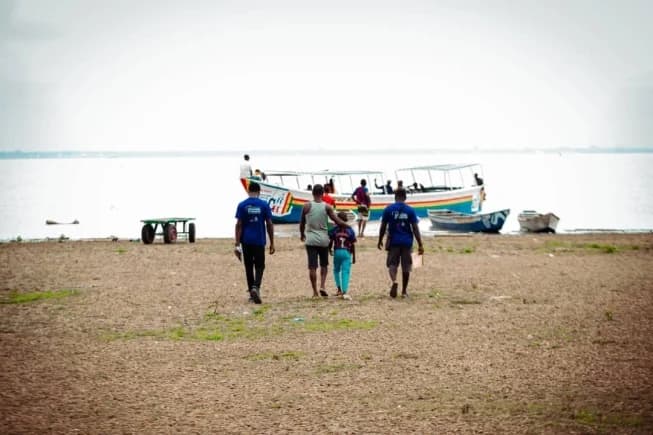
Complementing these state efforts, the non-governmental organization Challenging Heights recently rescued 25 children from forced labor on Lake Volta. Working in collaboration with the Ghana Police Service and the Department of Social Welfare, the team recovered 18 boys and 7 girls who are now receiving rehabilitation at the Challenging Heights Recovery Centre. Despite this success, the organization warned that approximately 20,000 children remain trapped in forced labor on the lake. They have called on the government to significantly increase resources for child protection initiatives to address the systemic nature of child abuse and trafficking within the fishing industry.
Beyond Ghana’s borders, a coalition of 20 African civil society organizations has issued a stern demand for an independent investigation in Guinea. This follows the discovery of six unidentified male bodies in a mass grave in the village of Alassoya, located in the Forecariah prefecture of Lower Guinea. The remains were found on August 24 by local residents gathering firewood, sparking immediate concerns regarding extrajudicial killings or hidden violence. The NGOs are urging Guinean authorities to ensure a thorough and transparent probe to determine the identities of the deceased and the circumstances surrounding their deaths.
These collective events underscore a critical juncture for human rights in the sub-region. While security operations and NGO interventions provide immediate relief to victims of trafficking and forced labor, the broader context remains fraught with challenges. Activists emphasize that without sustained government commitment, increased funding for social welfare, and international cooperation to investigate unexplained deaths, the cycles of exploitation and impunity will continue to threaten the most vulnerable populations in West Africa.
Related topic
Ghana Immigration Service Recruitment: Latest News →