••
Ghana’s Economic Recovery Gains Momentum with Strong Q1 Growth, Trade Surplus, and Cedi Stability
•3 min read•9 sources
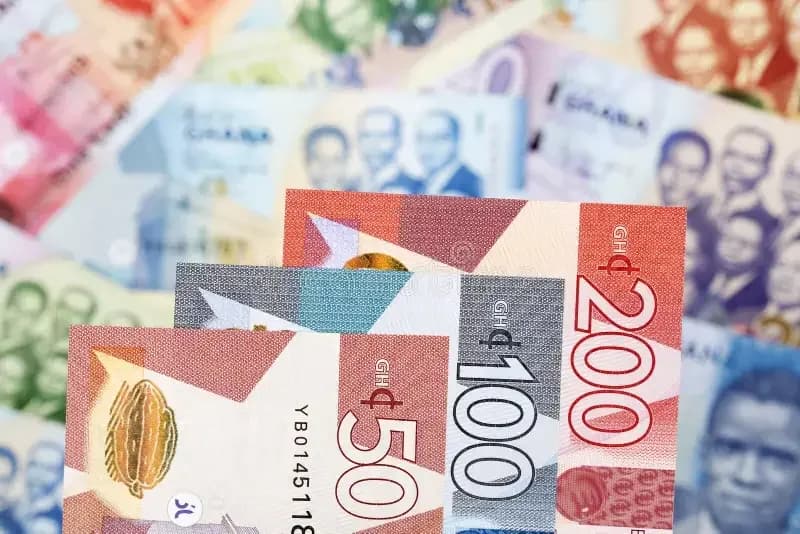
Ghana’s economic landscape in early 2026 is characterized by robust recovery markers, headlined by a 6.4% real GDP growth in the first quarter and a significant GH¢46.1 billion merchandise trade surplus. Following the implementation of the Domestic Debt Exchange Programme (DDEP), the government has demonstrated fiscal commitment by recently disbursing GH¢10.82 billion to bondholders, bringing total payments since 2025 to GH¢41.36 billion. This period of renewed fiscal discipline coincides with a sharp drop in inflation, which reached 4.6% by July 2026, signaling a return to relative price stability under the current administration of President John Mahama.
Central to this stability is the performance of the Ghana cedi, which analysts project will trade within a range of GH¢10.95 to GH¢11.76 against the US dollar through September. The Bank of Ghana (BoG) has played a pivotal role in curbing volatility, injecting approximately US$912 million into the market in August alone. As of September 1, interbank rates stood at GH¢11.26 for selling, while forex bureau rates remained slightly higher at GH¢12.20. While the cedi experienced a 2.67% depreciation in August, its year-to-date loss improved significantly to 6.89%, down from over 10% in July. The BoG is expected to further increase its foreign exchange support to manage rising seasonal import demands as the festive season approaches.
Ghana’s trade performance remains a cornerstone of its recovery, with exports reaching GH¢110.3 billion against imports of GH¢64.2 billion in Q1 2026. Gold remains the dominant driver, generating GH¢63.7 billion, followed by cocoa beans at GH¢12.9 billion. On the governance front, the Ministry of Finance reported a major success in public financial management, with financial irregularities across audited sectors falling by 62.9% to GH¢7.69 billion in 2025. This reduction surpassed the government’s target of 50%, highlighting strengthened accountability across ministries, local assemblies, and public boards.
Beyond Ghana's borders, the West African sub-region shows varied economic trajectories. Nigeria’s economy expanded by 4.43% in Q2 2026, driven by a surge in oil production to 1.72 million barrels per day, though it remains short of President Bola Tinubu’s 7% growth target ahead of their 2027 elections. Meanwhile, Senegal has secured a staff-level agreement with the IMF for a new $2.2 billion loan program to support economic reforms through 2029, following the discovery of previously unreported debt that had reached 132 percent of its GDP.
While these indicators point toward a stabilized Ghanaian economy, experts emphasize that long-term success hinges on diversifying the investment base. Investors are being urged to pivot toward agribusiness, healthcare, and infrastructure rather than relying solely on traditional government securities. Addressing structural weaknesses—such as the "real term" trade deficit and a narrow export market base currently reliant on India and Switzerland—will be essential to insulating the economy from future external shocks and ensuring sustainable growth.
Related topic
John Mahama: Latest News & Updates →Live rates
Ghana gold price →
