Anansi News
HomeBriefsAsk GhanaTopicsTools
•
•

Stay Informed

Get AI-curated news briefs from Ghana delivered to your inbox every morning. Free forever, no spam.

Explore

  • Home
  • Briefs
  • About

Categories

  • Politics
  • Business
  • Sports
  • Entertainment
  • Africa

Features

  • Analysis
  • Cedi Rates
  • Dollar to Cedi
  • Ghana Gold Price
  • BoG Policy Rate

Topics

  • Armed Forces Recruitment
  • WAEC Results & News
  • Nana Ama McBrown
  • NDC News
  • All Topics

Legal

  • Privacy Policy
  • Terms of Service
Anansi News© 2026. All rights reserved.
Made withfor Ghana
politics

Ghana Politics Shaken by High-Profile Corruption Charges and Diplomatic Tensions Involving Top Officials

17th May•3 min read•17 sources
Ghana Politics Shaken by High-Profile Corruption Charges and Diplomatic Tensions Involving Top Officials
  1. Home
  2. /Politics
  3. /Ghana Politics Shaken by High-Profile Corruption Charges and Diplomatic Tensions Involving Top Officials

Ghana’s political landscape is currently dominated by a series of significant legal developments as the state initiates major criminal proceedings against several high-ranking figures. From the Ashanti Regional Chairman of the New Patriotic Party (NPP) to the former CEO of the National Food and Buffer Stock Company (NAFCO), allegations of multi-million-cedi fraud and misappropriation of public funds have come to the forefront. These cases, alongside the arrest of a Member of Parliament in the United States and ongoing international judicial appeals, mark a period of intense public and political scrutiny regarding accountability and the rule of law.

Central to these developments are the charges against Bernard Antwi-Boasiako, popularly known as Chairman Wontumi. The Attorney-General’s Office has filed a case involving an alleged GH₵30 million financial loss to the Ghana EXIM Bank. Wontumi is accused of defrauding the bank through a GH₵19 million agricultural loan application in 2018, which reportedly utilized forged documents and falsified claims of large-scale farming operations. Investigators allege that the funds were instead diverted into personal accounts for unrelated ventures. Despite these grave charges, which include money laundering and causing financial loss to a public body, Wontumi continues his bid for the National Chairmanship of the NPP, even as his alleged accomplice remains at large.

Simultaneously, former NAFCO CEO Hanan Abdul-Wahab Aludiba and his wife, Faiza Seidu Wuni, are facing 20 criminal counts related to financial improprieties exceeding GH₵60 million. The Attorney General alleges that Aludiba diverted approximately GH₵50.8 million from NAFCO under the guise of foodstuff purchases and fraudulently obtained hundreds of thousands of cedis through false rent claims. His wife faces charges of money laundering and fraud linked to her business, Alqarni Enterprise. This case has drawn significant attention due to NAFCO’s vital role in national food security, with defense lawyers already raising concerns about the treatment of the accused following their re-arrest by the Economic and Organised Crime Office (EOCO).

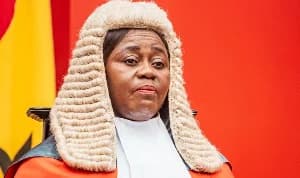
Beyond the domestic courtrooms, Ghana faces a potential diplomatic crisis following the arrest of Kwame Ohene Frimpong, MP for Asante Akim North, in the United States. While legal experts suggest the U.S. likely withheld information to protect their investigation, local political figures like Solomon Owusu anticipate an imminent by-election in the constituency. Further complicating the political climate are claims by legal practitioner Oliver Barker-Vormawor that the U.S. is strategically retaining former Finance Minister Ken Ofori-Atta to exert pressure on the NDC government. Meanwhile, the ECOWAS Court has adjourned a ruling on former Chief Justice Gertrude Torkornoo’s attempt to halt her removal proceedings, as Ghana argues for national jurisdiction.

These interconnected legal and diplomatic sagas highlight a growing demand for integrity in public office and the complexities of international cooperation in criminal matters. As these cases proceed through the High Court in Accra and international bodies like the ECOWAS Court, the outcomes will likely have profound implications for Ghana's political stability and the credibility of its institutions. With potential by-elections on the horizon and internal party contests heating up, the intersection of law and politics continues to be the defining narrative of the current season.

Our Take

From the Team

Coming Soon

Our team will add key insights, trends, and actionable takeaways to help you stay informed faster.

This story touches markets covered on Anansi Intelligence ↗.

Related topic

NDC (National Democratic Congress): Latest News →

Live rates

Dollar to cedi rate →

More from politics

Continue exploring similar stories

The army seized power in the Portuguese-speaking country in November, days after a presidential election.  By Patrick MEINHARDT (AFP/File)
politics|Yesterday

Vice President Nchimbi’s Historic Resignation in Tanzania and Nigerian Security Crisis Lead Global Political Shifts

Tanzania is navigating a period of significant political uncertainty following the historic and voluntary resignation of Vice President Emmanuel Nchimbi. Effective September 4, Nchimbi’s departure marks the first time a sitting vice president has stepped down since the country achieved independence in 1964. Citing a commitment to President Samia Suluhu Hassan’s vision for administrative change, Nchimbi’s exit comes amid growing concerns over media freedom and the legitimacy of recent elections. President Hassan is now tasked with appointing a successor as critics warn of a potential slide back into authoritarian practices, a shadow that has loomed over the administration following the suspension of critical news outlets and crackdowns on dissent. Meanwhile, in West Africa, Nigerian President Bola Tinubu has ordered an immediate military manhunt and rescue operation following a devastating mass kidnapping in Niger State. Reports indicate that approximately 600 people were abducted during a coordinated attack on a mosque, an incident that also claimed at least 30 lives. The scale of this abduction has exposed deep-seated security failings in the region, prompting an increase in cross-border flight as citizens seek safety in neighboring Benin. This security crisis in Nigeria mirrors a horrific escalation of violence in Haiti, where the United Nations reports that 47 people were killed and over 50 kidnapped in Kenscoff. Armed gangs, which now control 70% of Port-au-Prince, carried out executions inside a church compound, underscoring the deteriorating global security landscape. Across the continent, other leaders are moving to consolidate or transition power. In Uganda, military chief Muhoozi Kainerugaba has officially declared his intention to run for the presidency in 2031, signaling a clear succession plan for his father, President Yoweri Museveni. This announcement coincides with the dropping of corruption investigations into former Speaker of the House Anita Among. Simultaneously, Guinea-Bissau is holding a controversial referendum to transition from a parliamentary to a presidential system, which would grant the president the authority to dismiss the prime minister and dissolve parliament. These moves toward centralized authority are echoed in Central Asia, where Kazakh President Kassym-Jomart Tokayev has solidified his rule after his Adilet party secured over 71% of the vote in a new unicameral parliamentary election that notably lacked any opposition candidates. These widespread political shifts highlight a growing tension between the consolidation of executive power and the maintenance of democratic pluralism and public safety. Whether through constitutional referendums in Guinea-Bissau, legislative restructuring in Kazakhstan, or military purges in Guinea—where President Mamadi Doumbouya recently dismissed 173 soldiers—the global political landscape is being reshaped by leaders seeking greater control amidst internal and external threats. As the international community and organizations like the United Nations call for intervention in crises like those in Haiti and Nigeria, the focus remains on whether these administrative changes will lead to greater stability or further erode human rights and judicial independence across these nations.

Middle East Tensions Surge as Syria and Israel Hold Rare US-Mediated Talks Amid Global Sanctions and Conflict
politics|Yesterday

Middle East Tensions Surge as Syria and Israel Hold Rare US-Mediated Talks Amid Global Sanctions and Conflict

High-stakes diplomatic efforts are underway in Amman, Jordan, as Syrian and Israeli officials engage in rare, U.S.-mediated discussions aimed at de-escalating military tensions. The Syrian delegation, led by Foreign Minister Asaad al-Shaibani, met with Israeli counterparts and intelligence heads on August 24 to address a series of recent Israeli strikes on Syrian territory, including the strategic Abu al-Duhur airport. While Syria continues to condemn these actions as violations of its national sovereignty and maintains its historical claim over the Golan Heights, the primary focus of the talks remains a push for Israeli military withdrawal to pre-2024 lines to prevent a broader regional conflagration. Even as diplomatic channels open, the situation on the ground remains volatile. Israeli Defence Minister Israel Katz has issued a stern warning to Hamas, declaring that the launch of incendiary kites, balloons, or drones from the Gaza Strip will be treated as an "act of war." Following the discovery of such devices near the border, Katz threatened to target Hamas leadership and associated infrastructure. Concurrently, the Israeli military has intensified its targeted operations, reporting the deaths of several Hamas members allegedly linked to the October 7 massacre. This military pressure coincides with significant domestic legal shifts in Syria, where the Fourth Criminal Court in Damascus recently sentenced former Grand Mufti Ahmad Hassoun to life imprisonment for inciting civil war and crimes against humanity, marking a firm stance against the remnants of previous regime influences. On the global stage, economic warfare is intensifying as the United States prepares to launch an "economic D-Day" against Iran. U.S. President Donald Trump has announced a new wave of sanctions, described by Treasury Secretary Scott Bessent as the toughest in history. In response, Iranian Parliament Speaker Mohammed Bagher Ghalibaf warned that these measures would have a "boomerang effect," potentially harming the American economy. Iranian National Security Council head Mohsen Rezaee further cautioned neighboring oil-rich nations that cooperation with these sanctions would be viewed as an act of enmity, threatening the stability of oil transit through the Persian Gulf. Meanwhile, Ukraine marked its 35th anniversary of independence under the shadow of ongoing Russian aggression. In a defiant address, President Volodymyr Zelensky challenged Russian President Vladimir Putin and called for international unity to compel a Russian withdrawal. Despite the celebratory occasion, deadly Russian strikes were reported in Pavlohrad and Chernihiv, causing civilian casualties and highlighting the resilience required by the Ukrainian people after more than 1,640 days of war. These geopolitical shifts are occurring alongside a landmark legal settlement in the technology sector, with Meta agreeing to pay up to $18 billion over ten years to settle U.S. state claims regarding the harmful effects of Instagram and Facebook on children, signaling a new era of corporate accountability for digital safety. As these disparate conflicts and diplomatic maneuvers unfold, the international community faces a complex web of economic pressure and territorial disputes. The success of the Syria-Israel talks in Jordan could serve as a critical bellwether for regional stability, while the escalating sanctions against Iran and the enduring conflict in Ukraine continue to test the limits of global diplomacy. In a world increasingly defined by both technological regulation and traditional warfare, the coming weeks will be pivotal in determining whether de-escalation efforts can outpace the growing rhetoric of war and economic isolation.

Solomon Asamoah (left), former GIIF CEO, and Prof. Christopher Ameway Ekumfi, former Board Chair  of GIIF
politics|Yesterday

Ghana High Court Moves Forward with Accountability Trials for Former NAFCO and SkyTrain Officials

The Accra High Court has signaled a commitment to advancing high-profile accountability cases, setting critical deadlines for former public officials and notable figures involved in significant financial and criminal allegations. At the forefront of these proceedings is the trial of Hanan Abdul-Wahab Aludiba, the former CEO of the National Food Buffer Stock Company (NAFCO), and his wife, Faiza Seidu Wuni. Facing charges of money laundering and causing financial loss to the state, the couple recently sought a stay of proceedings. However, Justice Francis Apangabuno Achibonga ruled that such applications do not automatically halt trial progress. While the court rejected a request to postpone the case until late October, it granted a brief adjournment to September 29 and 30, 2026, citing health concerns raised by the defense. Simultaneously, the judiciary is addressing the controversial $2 million SkyTrain project. The High Court has granted former officials of the Ghana Infrastructure Investment Fund (GIIF), Solomon Asamoah and Professor Christopher Ameyaw-Akumfi, until September 23, 2026, to file their witness statements. This marks the third extension granted in the case, where the accused are charged with causing financial loss regarding a project that ultimately never broke ground. Despite the prosecution's objections regarding repeated delays, the court exercised its discretion to allow the defense additional time to prepare, underscoring the complexities involved in adjudicating large-scale infrastructure investments. In a separate legal development involving a prominent public figure, the Accra Circuit Court granted GH 400,000 bail to Kailani Ibrahim Kpa, popularly known as "Powder Man." The viral Black Stars supporter, who gained fame during the 2026 FIFA World Cup, is facing allegations of visa fraud totaling over US$30,000. Ibrahim is accused of defrauding 13 individuals by promising to facilitate travel to North and Central America. While he maintains his innocence and claims to have worked with legitimate travel agents, he is required to provide three sureties as a condition of his release before his next appearance on September 28, 2026. Beyond Ghana’s borders, high-stakes legal battles continue to draw international attention. In Cape Town, former Miss Universe Nigeria Chidinma Adetshina was reportedly attacked by a crowd following a court appearance related to her South African citizenship and potential deportation. Meanwhile, in the United States, a federal judge has dismissed Ghislaine Maxwell’s appeal to overturn her 20-year sentence for her role in the Jeffrey Epstein scandal, describing her claims as meritless. Collectively, these cases highlight a global and domestic trend of rigorous judicial scrutiny for figures in positions of power and influence, with the upcoming weeks in September set to be a pivotal period for the Ghanaian justice system's pursuit of accountability.

NYA holds maiden National Youth Parliament mock sitting
politics|Yesterday

President Mahama Commits GH"1bn to Bawku Revitalisation Amid Warnings Over Political Vigilantism and Land Disputes

President John Dramani Mahama has inaugurated a five-member committee to oversee the implementation of a GH"1 billion Bawku Revitalisation Fund, a major initiative aimed at rebuilding the conflict-affected region and restoring its status as a commercial hub. Chaired by Finance Minister Dr. Cassiel Ato Forson, the committee includes notable figures such as MP Mahama Ayariga and Upper East Regional Minister Akamugri Donatus Atanga. The fund is designed to improve infrastructure, support local businesses, and revive stalled projects like the Tamli Dam. President Mahama emphasized that improved security conditions, following the Otumfuo Mediation Committee's 2025 report, have created the necessary environment for this significant state intervention to ensure equitable national development. While the government focuses on regional development, national security officials have issued stern warnings regarding the resurgence of political vigilantism. National Security Coordinator COP Razak Abdul-Osman revealed that despite the Vigilantism and Related Offences Act (Act 999), some groups are regrouping under the guise of internal party security. Complementing this concern, former National Security Minister Francis Kwaku Poku warned that legislation alone cannot eradicate vigilantism if systemic issues like land administration failures and judicial delays remain unaddressed. Experts, including Dr. Kwame Asah-Asante, have called for an end to political interference in police affairs to allow for more effective enforcement of electoral security laws ahead of future polls. Accountability within the security services has also come under intense scrutiny following recent incidents of alleged professional misconduct. The Ghana Police Service has interdicted Deputy Superintendent of Police (DSP) Alhassan Malaika Jibril for his involvement in a controversial demolition at the Accra Race Course in Borteyman. The exercise, which involved approximately 200 armed individuals, resulted in the destruction of horse stables and facilities belonging to the Accra Turf Club. In a separate incident, Nii Seremewuo, the Chief of Adoteiman, has alleged a brutal assault and wrongful detention by military officers led by a Captain, further fueling calls for independent investigations into the conduct of uniformed personnel. In broader governance and social stability efforts, Interior Minister Muntaka Mohammed-Mubarak reported the removal of thousands of migrant beggars and illegal immigrants involved in organized crime, balancing national security with humanitarian standards. To foster long-term democratic resilience, the National Youth Authority (NYA) recently held its maiden National Youth Parliament mock sitting to prepare the next generation for active participation in governance. These developments collectively highlight a period of intensive state activity focused on healing regional conflicts, tightening national security frameworks, and enforcing institutional accountability to safeguard Ghana's democratic stability.

All
africa
business
education
entertainment
health
news
politics
sports
technology