••
Mahama Administration Faces SHS Placement Crisis Amid Infrastructure Deficits and Grading Equity Concerns
•3 min read•9 sources
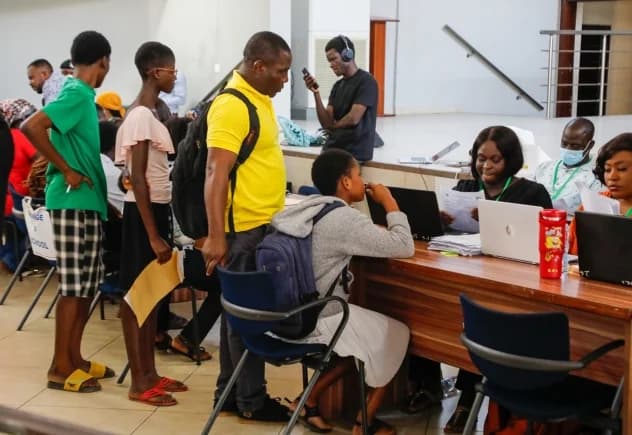
The 2026 Senior High School (SHS) placement exercise has triggered a national crisis, as thousands of parents and graduates descend on Computerised School Selection and Placement System (CSSPS) resolution centers across Ghana. While the Ghana Education Service reports that approximately 87.3% of qualified candidates have been placed, the remaining 57,259 students must navigate a self-placement portal fraught with technical and logistical hurdles. In Accra and Kumasi, resolution centers have been overwhelmed, with frustrated parents spending nights at GNAT Hall to resolve discrepancies, such as students from Accra being assigned to Cape Coast schools as day students. The reporting date for first-year students remains set for September 18, 2025, despite these ongoing challenges.
Political and civil society voices have intensified their scrutiny of the current administration’s handling of the sector. Kofi Tonto, a spokesperson for the New Patriotic Party (NPP), criticized the President John Mahama-led government, arguing that the current chaos reflects a failure to deliver on promised educational reforms. Amid these tensions, former Education Minister Yaw Osei Adutwum raised an alarm regarding a severe teacher shortage, noting that approximately 30,000 classrooms lack teachers, affecting nearly one million students. He emphasized that without addressing this 43,000-teacher deficit, the quality of instruction—particularly in core subjects like Mathematics—will continue to decline.
Calls for systemic infrastructure investment are mounting from both sides of the aisle. Prof. Kingsley Nyarko, MP for Kwadaso, has urged the Ministry of Finance to immediately release GETFund resources to expand classroom and dormitory capacities. Similarly, Hopeson Adorye of the United Party (UP) highlighted the impracticality of the current placement system, advocating for a massive increase in boarding facilities to accommodate students placed far from home. In the Ashanti Region, the crisis is further complicated by a "mass exodus" from Category C and D schools; Rev. Nicholas Adu Berko, Headmaster of Mansoman SHS, revealed that only 18 out of 800 placed students had reported, as families sought transfers to perceived "superior" Category A institutions.
Beyond infrastructure, the NGO School for Life has challenged the fundamental equity of the 2026 Basic Education Certificate Examination (BECE) grading system. The organization argues that the current ranking-based approach disadvantages students from under-resourced communities who lack access to qualified teachers. They are advocating for a transition to a criterion-referenced system, similar to the WASSCE, to ensure that student performance is measured against fixed benchmarks rather than peer competition. As the academic year begins, the government faces increasing pressure to harmonize the CSSPS with local infrastructure realities to ensure that every student has equitable access to secondary education.
Related topic
Ghana Education Service (GES): Latest News Today →

