••
Fitch Solutions Forecasts 2027 Inflation Surge to 11.3%, Prompting Projected Bank of Ghana Rate Hikes
•2 min read•3 sources
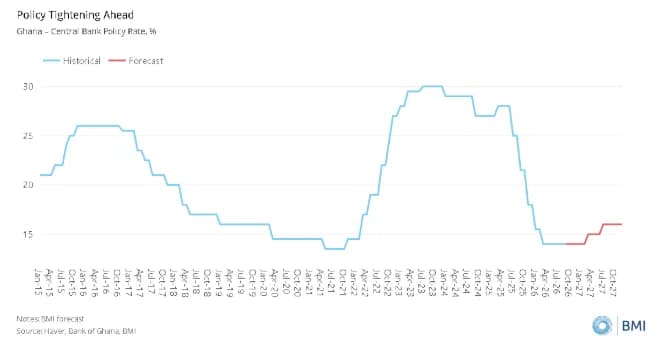
Fitch Solutions has projected a significant shift in Ghana's economic outlook, forecasting that inflation will jump from an annual average of 4.7% in 2026 to 11.3% in 2027. This anticipated surge is expected to trigger a decisive response from the Bank of Ghana (BoG), with the research firm predicting a cumulative 200 basis points hike in the policy rate to reach 16.00% by the end of 2027. For the remainder of 2026, however, the central bank is expected to maintain its current 14.00% policy rate, supported by relatively low inflation that averaged 4.0% earlier this year. While inflation is projected to climb to 6.8% by December 2026 due to rising energy costs and cedi depreciation, it remains within a range that limits the immediate need for monetary tightening. The domestic currency market is also seeing structural changes, as the BoG has signaled it will not conduct a foreign exchange intermediation program in October 2026. Instead, the Ghana Gold Board (GoldBod) is expected to inject up to US$1 billion into the market from gold export proceeds to manage liquidity. The sharp inflationary spike predicted for 2027 is driven by a combination of domestic and global factors. Fitch Solutions identifies waning exchange rate support, modest fiscal loosening, and a substantial surplus in money supply growth relative to GDP as primary internal drivers. Externally, an ongoing El Niño event is forecasted to inflate global food prices, while persistent geopolitical tensions in the Middle East could further elevate energy costs, compounding imported inflation. These pressures are expected to push inflation past the 10% threshold by the second quarter of 2027, necessitating the central bank's projected rate hikes. Looking ahead, Ghana's current account surplus is expected to narrow from 7.9% of GDP in 2026 to 5.3% in 2027, influenced by declining gold prices and lower cocoa production. Fitch Solutions notes that the Bank of Ghana will likely prioritize maintaining positive real interest rates to attract investment, even as it faces challenges in meeting its ambitious import cover targets. These economic headwinds suggest a more restrictive monetary environment will be necessary to stabilize the economy as the administration of President John Mahama navigates these projected inflationary pressures.
Related topic
John Mahama: Latest News & Updates →Live rates
Bank of Ghana policy rate →

