••
Ghana Statistical Service reports only 7.7% of businesses are formal
•2 min read•10 sources
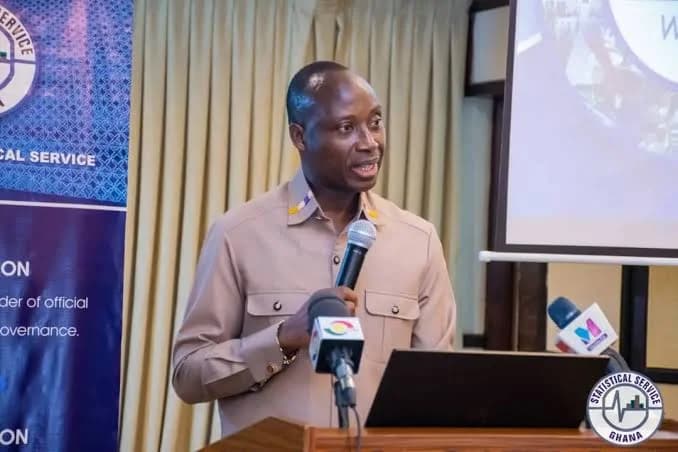
The Ghana Statistical Service (GSS) has officially launched its flagship "Ghana in Numbers 2025" report, revealing that out of 2.64 million businesses in the country, only 7.7% operate formally. Government Statistician Dr. Alhassan Iddrisu, speaking at the launch in Accra, noted that while the number of business establishments has nearly tripled over the last decade, job creation has failed to keep pace. The findings indicate that over 92% of Ghana's business landscape remains informal, dominated primarily by micro-enterprises that often struggle to scale or provide stable employment.
Despite the rapid growth in the number of firms, the quality of employment remains a significant concern for policymakers. GSS data shows that over 70% of all jobs in Ghana are informal. While the national unemployment rate decreased from 14.6% in 2023 to 12.8% in 2025, the report identified a substantial segment of the population left behind. Nearly two million young Ghanaians are currently not engaged in education, employment, or training (NEET), with women comprising over 60% of this group. This statistic underscores an urgent need for targeted interventions to improve job prospects for the growing youth population.
On a macroeconomic level, the report valued Ghana’s economy at GH₵1.4 trillion in 2025. The country recorded a goods trade surplus of GH₵148 billion, driven by exports totaling GH₵402 billion against imports of GH₵250 billion. Gold remains the dominant export, accounting for 63% of the total export value, while approximately half of all exports were sent to Asian markets. Additionally, the GSS recorded a significant drop in the inflation rate, which fell from 23.8% in December 2024 to 5.4% by December 2025. However, Dr. Iddrisu cautioned that despite a reduction in multidimensional poverty from 31.2% to 23%, food insecurity continues to affect approximately 13 million people.
The report also unveiled the massive scale of informal cross-border trade with neighboring countries, which was valued at GH₵38.4 billion, a figure significantly higher than previously recorded. To ensure the continued accuracy of such data, Dr. Iddrisu appealed for sustained domestic funding, including a GH₵207 million allocation for the rebasing of the Gross Domestic Product and the Consumer Price Index. Deputy Minister for Finance Thomas Nyarko Ampem and Bank of Ghana Governor Dr. Johnson Pandit Asiama both emphasized that these reliable statistics are vital for effective economic governance and will serve as a shared evidence base for planning under the current administration.
graphic.com.gh
PrimarybusinessGSS launches ‘Ghana in Numbers 2025’ to guide national planning
citinewsroom.com
businessOver 90% of Ghana’s businesses remain informal despite sector growth – GSS
gbcghanaonline.com
businessGovernment Statistician appeals for sustained funding for Ghana’s statistical system
gbcghanaonline.com
businessGhana records GH¢148bn trade surplus in 2025 – Government Statistician
myjoyonline.com
businessOnly 7.7% of Ghana’s 2.64m businesses operate formally – Government Statistician
myjoyonline.com
business92% of Ghanaian businesses operate informally – GSS report
gbcghanaonline.com
businessNearly 2m Ghanaian youth not in work, education or training – Government Statistician
modernghana.com
businessGhana’s businesses nearly triple in a decade, but formal firms remain at 7.7% – GSS
gbcghanaonline.com
businessGhana’s economy worth GH¢1.4 trillion in 2025 – Government Statistician
classfmonline.com
businessGhana’s businesses growing faster than jobs as 92% remain informal – GSS
Live rates
Ghana gold price →