Anansi News
HomeBriefsAsk GhanaTopicsTools
•
•

Stay Informed

Get AI-curated news briefs from Ghana delivered to your inbox every morning. Free forever, no spam.

Explore

  • Home
  • Briefs
  • About

Categories

  • Politics
  • Business
  • Sports
  • Entertainment
  • Africa

Features

  • Analysis
  • Cedi Rates
  • Dollar to Cedi
  • Ghana Gold Price
  • BoG Policy Rate

Topics

  • Armed Forces Recruitment
  • WAEC Results & News
  • Nana Ama McBrown
  • NDC News
  • All Topics

Legal

  • Privacy Policy
  • Terms of Service
Anansi News© 2026. All rights reserved.
Made withfor Ghana
education

Ghana's Education Sector Secures Major Funding from GETFund and FIFA as Rural Infrastructure Challenges Persist

21st July•3 min read•5 sources
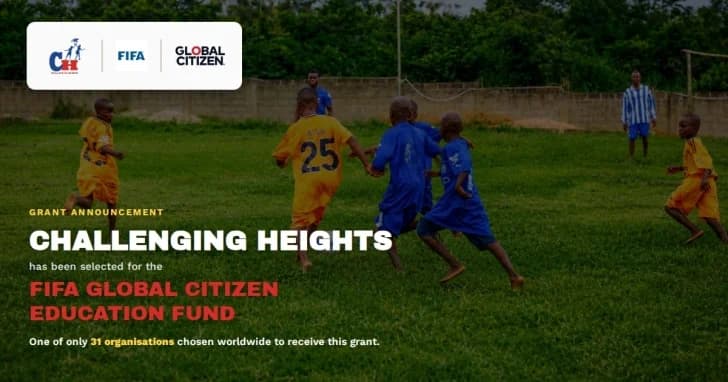
Challenging Heights selected for FIFA Global Citizen Education Fund
  1. Home
  2. /Education
  3. /Ghana's Education Sector Secures Major Funding from GETFund and FIFA as Rural Infrastructure Challenges Persist

Ghana's educational landscape is undergoing a significant transformation through a series of multi-level interventions ranging from international grants to local scholarship schemes. In a landmark move for inclusive education, the Ghana Education Trust Fund (GETFund) has allocated GH"100 million to support free education for persons with special needs. This initiative aims to remove financial barriers for learners with disabilities across the country, ensuring that educational opportunities are accessible to all regardless of their physical or cognitive challenges. Stakeholders have hailed this allocation as a critical step toward achieving national equity goals and reinforcing the government's commitment to vulnerable student populations.

On the international front, the Ghanaian child rights organization Challenging Heights has been selected as one of only 31 organizations globally to receive support from the FIFA Global Citizen Education Fund. This partnership, which aims to mobilize USD $100 million by the 2026 World Cup, will specifically fund the renovation and equipping of the Recovery Centre classroom for the Inclusive Learning & Opportunity Program. This project is designed to provide a safe haven for children recovering from trafficking, offering individualized literacy support, counseling, and creative learning opportunities to help survivors reintegrate into the formal school system.

At the local level, Dr. Clement Abas Apaak, the Member of Parliament for Builsa South and Deputy Minister of Education, has committed GH"331,000 from the District Assemblies Common Fund to support 248 financially disadvantaged tertiary students. Under this scheme, university students will receive GH"1,500 each, while those in nursing and teacher training colleges will receive GH"1,000. This targeted financial assistance is intended to alleviate the economic burden on brilliant but needy students, ensuring they can complete their professional programs and contribute to sustainable development within their communities.

Despite these significant financial inflows, severe infrastructure gaps continue to threaten educational outcomes in rural areas, particularly in the Nanumba North Municipality. In the Sikpan Electoral Area, communities remain trapped on the margins of development due to seasonal flooding and poor road networks that frequently cut off access to schools. The Okpanjani E.P. Basic School, which serves over 200 pupils, currently lacks permanent classroom facilities, leading to high absenteeism and poor learning conditions during the rainy season. Residents have issued an urgent plea to local authorities for functional school buildings and improved roads to end their isolation.

While the GH"100 million GETFund allocation and international grants like the FIFA fund represent major milestones for inclusive and specialized education, the situation in Nanumba North serves as a stark reminder of the infrastructure deficit facing rural Ghana. The convergence of these stories highlights a dual reality in the sector: a growing sophisticated support system for vulnerable and tertiary students, contrasted with a fundamental need for basic physical infrastructure in the nation's most remote farming communities. Moving forward, the effectiveness of these financial commitments will depend largely on timely disbursement and a parallel focus on resolving geographical barriers to access.

Our Take

From the Team

Coming Soon

Our team will add key insights, trends, and actionable takeaways to help you stay informed faster.

This story touches markets covered on Anansi Intelligence ↗.

Live rates

Dollar to cedi rate →

More from education

Continue exploring similar stories

Data Insight and JOB Group Ltd Report Finds Job Security and Career Development Outrank Salary for Ghanaian Employees
education|21st August

Data Insight and JOB Group Ltd Report Finds Job Security and Career Development Outrank Salary for Ghanaian Employees

A comprehensive five-year study into the Ghanaian workforce has revealed a significant shift in employee priorities, with job security and the pursuit of a "dream job" now taking precedence over salary. The Employee Motivation Survey Report (EMSR), conducted by a consortium including Data Insight, JOB Group Ltd, HRP Consult Ltd, and Talentia Africa Ltd, indicates that non-financial factors have become the primary drivers of worker engagement in the country. This trend suggests that while financial compensation remains a baseline requirement, it is no longer the leading incentive for the modern Ghanaian professional. The survey identifies five core motivators that dominate the current workplace landscape: the pursuit of a dream job, job security, career development opportunities, a safe work environment, and the quality of the relationship between managers and employees. Notably, direct salary did not rank within the top five motivators among the 769 participants surveyed. This finding challenges traditional management assumptions that focus primarily on wage increases to boost productivity, highlighting instead a growing desire for professional growth and psychological safety within Ghanaian organizations. Analyzing data collected over a half-decade, the researchers found that workers expressed a general satisfaction level of 3.7 out of 5. While this indicates a relatively positive outlook, it also leaves significant room for improvement, particularly in how managers interact with their subordinates. The report emphasizes that positive manager-employee relationships and a structured path for career development are critical components of a healthy corporate culture. These elements are increasingly viewed as essential by employees who are looking for long-term stability and a sense of purpose in their daily tasks. As Ghana continues to navigate its economic path under the administration of President John Mahama, the implications for the private and public sectors are clear. Employers must move beyond purely financial incentives to attract and retain top talent. By focusing on creating stable environments and offering clear trajectories for professional advancement, organizations can better align their operations with the actual needs of the workforce. The EMSR serves as a call to action for human resource departments across the nation to re-evaluate their engagement strategies and prioritize the non-tangible benefits that truly drive employee dedication and performance.

23rd Ghana International Book Fair launched with call to place reading at heart of development
education|21st August

Ghana International Book Fair and Youth Outreach Programs Drive National Literacy and Development Agenda

The 23rd Ghana International Book Fair (GIBF) has been officially launched in Accra, setting the stage for a national dialogue on literacy as a catalyst for development. Scheduled to take place from August 27 to 30, 2026, at the National Theatre, the fair is themed "Transforming Ghana's Future Through Books." Speaking at the launch on August 20, Executive Director Yvonne Bossman emphasized that the nation's future depends on investing knowledge in its youth, positioning reading as a cornerstone of national progress. The event, organized by the GIBF Governing Board, aims to address challenges within the publishing sector while fostering a robust reading culture through initiatives like the Ghana Star Reader National Reading Competition. In a parallel effort to bridge the gap between classroom theory and community development, students from the University of Media, Arts and Communication (UniMAC) recently spearheaded "Project Dignity" at the Weija Leprosarium. On August 19, 2026, the students donated essential food and sanitary supplies while engaging with residents to better understand their needs and aspirations. Under the guidance of lecturer Dr. Kodwo Jonas Anson Boateng and group leader Fafa Peace Bankas, the students applied development communication strategies to challenge societal stereotypes. This initiative includes the production of a documentary designed to showcase the creativity and dignity of the leprosarium residents, illustrating the practical role of education in promoting social inclusion. Beyond literacy and higher education, regional authorities are intensifying efforts to protect and guide younger populations. In the Central Region, the Gender Director has urged parents and communities in Elmina and Nkanfoa to strengthen support systems for adolescents to shield them from abuse, neglect, and health risks. These engagements, part of the Ministry of Gender’s Essential Services Package, focus on establishing inclusive clubs where boys and girls can learn about their rights and the dangers of teenage pregnancy and STIs. Similarly, during the 50th-anniversary celebration of the Calvary Methodist Men’s Fellowship in Adabraka, former Attorney-General Gloria Akuffo and Fellowship Chairman Prof. Victor Agyeman advocated for a "Catch them young" strategy to instill Christian values in young men, viewing such mentorship as a vital tool to combat societal corruption. Collectively, these initiatives underscore a multi-faceted approach to education and youth development in Ghana. By combining formal literacy drives, practical community outreach, and robust social protection frameworks, stakeholders are working to ensure that the next generation is both intellectually equipped and socially secure. As the 23rd Ghana International Book Fair approaches, the emphasis remains on a collaborative effort between the government, educational institutions, and religious organizations to create a sustainable environment for national growth and ethical leadership.

Prof Pikay Richardson urges UGC graduates to choose integrity over convenience
education|21st August

GES Director-General Links School Financial Governance to WASSCE Performance as Universities Push for Academic Innovation

Professor Smile Dzisi, Director-General of the Ghana Education Service (GES), has issued a stern call for enhanced financial accountability in the Volta Region, linking poor resource management to declining academic outcomes. Speaking at a workshop for educational accountants and bursars, Prof. Dzisi revealed that the 2025 WASSCE results showed 18 schools in the region recorded zero progression rates. She emphasized that financial officers must act as custodians of public resources, ensuring that funds are strategically deployed to improve teaching and learning, particularly in Mathematics and Integrated Science. This push for accountability aligns with the Association of Educational Accountants (AEA) transitioning to International Public Sector Accounting Standards (IPSAS) to strengthen internal controls within the sector. Simultaneously, tertiary institutions across Ghana are advocating for a paradigm shift toward innovation and practical application of knowledge. At the University of Professional Studies, Accra (UPSA) Innovation Day, Vice Chancellor Professor John K. M. Mawutor encouraged students to translate classroom theories into real-world solutions, showcasing student-led ventures like SMART FIRM and the UNIVA360 accounting software. Similarly, Professor Ellis Owusu-Dabo, former Pro-Vice-Chancellor of KNUST, urged the University of Skills Training and Entrepreneurial Development (USTED) to redesign postgraduate education. He proposed a move away from traditional thesis models toward hybrid, interdisciplinary research that addresses climate pressures and youth unemployment. Ethics and integrity have also taken center stage in recent educational discourse. During the University of Gold Coast graduation, Governing Council Chair Professor Pikay Richardson challenged graduates to prioritize character and curiosity over financial success or convenience. This focus on integrity comes amidst public scrutiny of political contributions to education; the New Ghana Social Justice Forum (NGSJF) recently challenged MP Hon. Baba Jamal’s promise of 25% tuition support for law students, labeling it insufficient and demanding 100% coverage to qualify as a true scholarship. Internationally, Ghent University suspended academic Nathan Cofnas following his plagiarism allegations against the late Cambridge professor Jason Arday, highlighting the rigorous standards governing academic conduct. Finally, the role of specialized education in national development was highlighted by Dr. Francis Kofi Korankye-Sakyi of the Alternative Dispute Resolution (ADR) Centre. Addressing 123 graduates at the Institute of Paralegal Training and Leadership Studies, he advocated for ADR as a vital tool for accessible justice and peaceful coexistence. These collective developments across the educational landscape—from financial reforms in secondary schools to innovative research in universities—underscore a national drive toward creating a more accountable, resilient, and impact-oriented educational system for Ghana.

Graduates with disabilities appeal for separate recruitment clearance
education|21st August

GNAT Issues Strike Ultimatum as Graduates with Disabilities Demand Specialized Recruitment Clearance

Ghana's education and public sectors are facing mounting pressure as the Ghana National Association of Teachers (GNAT) and advocacy groups for persons with disabilities (PWDs) demand urgent government intervention. GNAT has issued a stern warning to the Ghana Education Service (GES) and relevant authorities, setting a September 7, 2026, deadline to resolve outstanding promotion placements and renew the Collective Agreement, which expired on July 31, 2026. National President Prosper Tachie highlighted that these delays have caused significant financial hardship and frustration among educators, warning that industrial action is imminent if their demands for career progression and negotiated benefits are not met. Simultaneously, approximately 400 qualified graduates with disabilities are appealing to the government for a dedicated recruitment clearance system to overcome long-standing barriers to employment in the public sector. Despite a national policy intended to reserve 5% of public-sector jobs for PWDs, Gilbert Boateng Mejari, convener of the Commission of Unemployed Graduates with Disabilities, reported that none of the 200 candidates they submitted for recent GES recruitment were selected. Many of these graduates have remained unemployed for between 5 and 15 years, prompting calls for a system that provides fair opportunities to utilize their skills for national development rather than special treatment. These grievances align with broader calls from the Ghana Federation of Disability Organisations (GFD) for the government to move beyond policy formulation toward effective implementation. During a recent workshop in Akosombo supported by the European Union, stakeholders emphasized that true progress must be measured by the accessibility of services and the active participation of PWDs in national decision-making. The GFD recommended strengthening the technical capabilities of the National Council for Persons with Disabilities and ensuring that PWDs are included in all stages of policy and budget consultations. The overlapping demands from teachers and disability advocates place a significant burden on the administration of President John Mahama to stabilize the education sector and fulfill statutory inclusion mandates. As the September 7 deadline approaches, the resolution of these labor and recruitment disputes will be a critical test of the government's commitment to both the welfare of its workforce and the fundamental rights of its most vulnerable citizens. Failure to address these concerns could lead to widespread disruptions in schools and further marginalization of qualified professionals based on their physical abilities.

All
africa
business
education
entertainment
health
news
politics
sports
technology