••
Ghana’s Education Crisis: Stakeholders Demand Reform Amid Placement Chaos and Declining WASSCE Results
•3 min read•29 sources
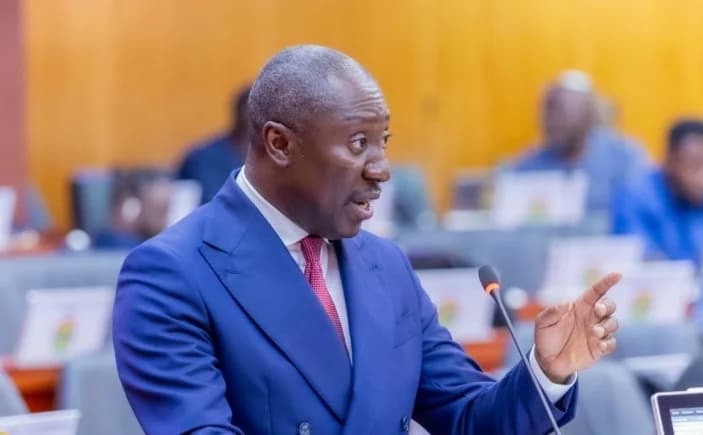
Ghana’s education sector is currently grappling with a dual crisis as nearly 55,000 Basic Education Certificate Examination (BECE) candidates remain unplaced in senior high schools, while recent West African Senior School Certificate Examination (WASSCE) results reveal that over 183,000 students failed to secure credits in Core Mathematics. Despite the Computerised School Selection and Placement System (CSSPS) reporting a record-high automatic placement rate of 87.32% for the 2026 cohort, the transition to secondary education has been marred by significant distress. Critics, including Minority Leader Alexander Afenyo-Markin, describe the situation as a national emergency, noting that the credit pass rate in English has also fallen to a four-year low of 62.40%. President John Mahama’s administration now faces mounting pressure to address these systemic failures and stabilize the future of over 200,000 students at risk of being left behind.
Education experts have pointed to recent policy shifts as the primary catalyst for the current placement distress. Dr. Kwabena Bempah Tandoh, former Deputy Director-General of the Ghana Education Service (GES), attributed the confusion to changes in the placement model that allowed candidates to select two Category A schools, creating a mismatch between demand and available vacancies. This view was supported by Professor Kwasi Opoku-Amankwa, who criticized the lack of clear guidelines for student selection. While the government maintains that the new COLDSIS system—introduced under the Mahama administration in 2025—is an improvement, former GES Director-General Charles Aheto Tsegah argued that the computerized system has failed to eliminate favoritism and suggested returning placement authority to headteachers to resolve the recurring annual chaos.
The crisis has reignited a fierce debate over the disparity between elite institutions and less-resourced schools. Ben Boakye, Executive Director of the Africa Centre for Energy Policy (ACEP), has urged the government to focus on improving quality across all schools rather than fixating on categorizing them as A, B, or C. To address immediate capacity issues, Education Minister Haruna Iddrisu has requested GH¢250 million from the Ghana Education Trust Fund (GETFund) to expand infrastructure at prominent schools such as Achimota, Wesley Girls’, and PRESEC. However, the Institute for Education Studies (IFEST) warned that focusing investments solely on Category A schools only exacerbates the crisis by making Category C institutions less attractive to parents and students.
To ensure a more equitable future, various stakeholders have proposed structural reforms to the educational landscape. The Ghana National Association of Teachers (GNAT) has recommended building well-resourced model schools in every region to reduce competition for popular urban schools, while the Ghana National Association of Private Schools (GNAPS) has called for the removal of the 15% priority placement quota for public schools, citing it as an unfair burden on private school students. As the government works to resolve the stranded status of nearly 55,000 families, there is a growing consensus on the need for a national dialogue regarding educational funding, teacher motivation, and the creation of clear pathways into TVET and apprenticeship programs for those who did not meet WASSCE credit requirements.
Related topic
Ghana Education Service (GES): Latest News Today →

