••
Ghana’s Economy Records 6% Growth in Q2 2026 Driven by ICT as Banking Profits Face Headwinds
•3 min read•8 sources
Ghana’s economy demonstrated sustained resilience in the first half of 2026, recording a real GDP growth of 6.0% in the second quarter, according to the Ghana Statistical Service (GSS). While this represents a slight deceleration from the 6.6% growth seen in the same period of 2025, the cumulative first-half growth reached a robust 6.2%. Total economic output for the quarter rose to GH¢51.3 billion, compared to GH¢48.4 billion a year earlier. Crucially, price pressures appear to be easing significantly, with the GDP deflator—a broad measure of inflation—plummeting from 18.6% to 5.5%, suggesting a more stable macroeconomic environment for businesses and households under President John Mahama’s administration.
The services sector remains the primary engine of national growth, contributing 45.9% to the GDP. The standout performer was the Information and Communication Technology (ICT) sector, which expanded by a remarkable 30.9% and accounted for 41.5% of the total economic expansion. Government Statistician Dr. Alhassan Iddrisu highlighted that this reflects a structural shift toward a digital-led economy, with digital services becoming indispensable for growth. The industrial sector also saw a boost of 4.3%, largely fueled by a 21.4% surge in oil and gas production. However, the agricultural sector lagged with a 3.9% growth rate, hampered by a significant 24.7% contraction in the fishing sub-sector, which poses a challenge for food security.
Despite the broader economic expansion, the banking industry experienced a more challenging landscape in the first half of the year. Sector-wide profit after tax fell by 1.3% to GH¢7.1 billion as of June 2026, a sharp reversal from the 32.6% growth recorded in 2025. This decline was primarily driven by a 3.1% contraction in net interest income and a staggering 38.2% increase in provisions for bad debts and impairments. While fees and commission income grew by 18.2%, overall profitability metrics like Return on Equity (ROE) trended downward. Meanwhile, the Bank of Ghana (BoG) remains focused on price stability, reaffirming its medium-term inflation target of 8 ± 2%, even as year-on-year inflation ticked up to 5.0% in August.
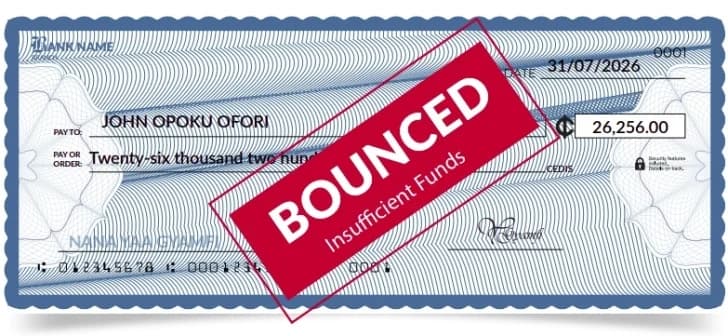
On the regulatory front, the Bank of Ghana has intensified its efforts to protect consumers and maintain financial discipline. The central bank recently flagged 20 unlicensed mobile loan applications for violating data privacy and regulatory standards, warning the public and financial institutions against transacting with these entities. Simultaneously, the BoG issued a stern warning regarding the issuance of dud cheques; account holders who issue three dishonored cheques within a year now face a three-year ban from issuing cheques and a one-year moratorium on new credit. These enforcement measures, alongside a 53.0% surge in investment during the quarter, indicate a dual focus on formalizing the financial sector while sustaining current growth momentum.
Related topic
John Mahama: Latest News & Updates →

