••
Experts Warn Against Reliance on Traditional Cycle Counting as Unintended Pregnancies Persist in Ghana
•2 min read•1 source
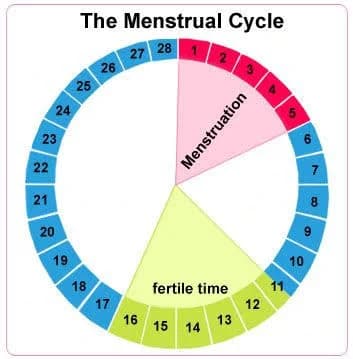
In Ghana, a significant number of women are caught in a dilemma between modern family planning technologies and traditional methods passed down through social circles. While digital fertility apps like Flo are gaining traction, many women, exemplified by the experiences of Ghanaian citizens like Bridget, continue to rely on informal 'cycle counting' to prevent pregnancy. This traditional approach involves estimating 'safe days' based on menstruation dates, a method favored because it is cost-free and perceived as natural. However, health professionals are raising the alarm that without a deep scientific understanding of ovulation, these methods are frequently inaccurate and contribute to high rates of unintended pregnancies.
Data from the 2022 Ghana Demographic and Health Survey (GDHS) highlights the scale of the issue, revealing that while awareness of modern contraceptives is high, only about 32% of women are actually utilizing modern family planning methods. A significant portion of the population remains dependent on traditional practices that lack scientific backing. Experts point out that the primary danger lies in the widespread misunderstanding of menstrual cycle lengths and the specific timing of ovulation. Many women operate under the false assumption that every cycle follows a standard 28-day pattern, ignoring the biological variations that can lead to fertilization during what they believe are 'safe' periods.
Health professionals emphasize that the core problem is not necessarily the choice between an app or a traditional method, but a fundamental lack of reproductive health education. Many women face significant challenges in accurately reading their own bodies' biological signs. Doctors and educators are now advocating for more robust fertility awareness programs that empower women with the knowledge to understand their reproductive cycles. They argue that whether a woman chooses a digital tool or a natural method, the effectiveness of her family planning depends entirely on her literacy regarding ovulation and her specific hormonal health.
As Ghana continues to navigate these public health challenges, the consensus among medical experts is that better education is the only path to reducing the risks associated with unreliable counting methods. By bridging the gap between traditional trust and modern scientific accuracy, the health sector aims to equip women with the necessary tools for safe and effective family planning. Strengthening reproductive health education is viewed as a critical step toward ensuring that women's choices are informed by biological reality rather than peer-influenced misconceptions.
