••
Ghana records $8.71bn trade deficit with China in 2025
•2 min read•1 source
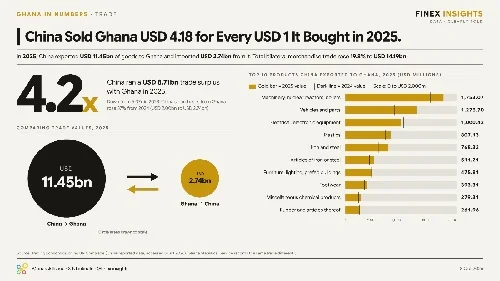
Ghana recorded a substantial trade deficit of $8.71 billion with China during the 2025 fiscal year. This significant imbalance is primarily attributed to a heavy reliance on imported manufactured goods from China, which far outpace the value of Ghana's exports, which continue to consist mainly of raw materials. The figures have sparked renewed concerns among economic stakeholders regarding the structural dependency of the national economy on foreign finished products.
In a strategic move to manage this commercial relationship and reduce transactional friction, the Bank of Ghana is working to simplify payment processes for local businesses dealing with Chinese suppliers. The central bank is now allowing trade settlements to be conducted in Chinese yuan through Stanbic Bank. This initiative is designed to facilitate smoother cross-border payments, potentially reducing the intensive demand for US dollars among Ghanaian importers who frequently trade with the East Asian economic giant.
While the simplified payment methods provide relief for importers, economists warn that financial mechanisms alone cannot fix the trade gap. The focus is now shifting toward export diversification and value addition. A significant opportunity for local producers is expected to arise on May 1, 2026, when China is scheduled to remove import tariffs on products originating from Ghana. This policy shift is intended to encourage Ghanaian businesses to scale their operations and enter the Chinese market more competitively.
Experts emphasize that addressing the $8.71 billion deficit requires a robust national strategy centered on industrialization and domestic production. By increasing the value-added component of exports and reducing the necessity for imported manufactured goods, Ghana aims to create more local jobs and stabilize the cedi. The upcoming tariff-free access to the Chinese market provides a critical window for the government to implement these industrial reforms and move toward a more balanced trade partnership.
Live rates
Dollar to cedi rate →

