••
Ghana records $8.71bn trade deficit with China for 2025
•2 min read•1 source
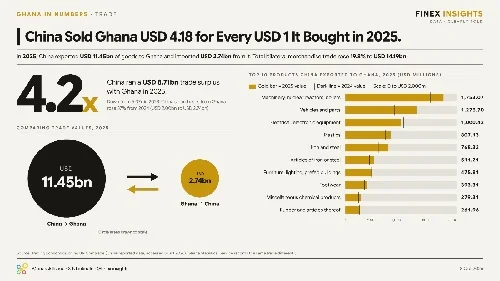
Ghana recorded a substantial trade deficit of US$8.71 billion with China in 2025, highlighting a persistent imbalance in the bilateral trade relationship. According to data from the period, the gap was primarily driven by a heavy reliance on Chinese manufactured goods, which far outpaced Ghana's exports to the Asian powerhouse. While trade volumes between the two nations remain robust, the nature of the exchange—importing finished products while exporting mostly raw materials—continues to put significant pressure on Ghana's trade balance.
To address the practical challenges of this high-volume trade, the Bank of Ghana has taken steps to streamline financial transactions and reduce dependency on third-party currencies. The central bank has facilitated a system allowing Ghanaian businesses to settle payments with Chinese suppliers directly in Chinese yuan. This initiative is being implemented through Stanbic Bank, providing a more efficient alternative to the traditional reliance on the US dollar for international trade settlements. This move is expected to simplify the procurement process for the importers who currently dominate the trade flow from China.
Looking ahead, there are concerted efforts to bridge the gap by diversifying Ghana's export base and increasing value addition. A significant development in this regard is China's decision to remove import tariffs on Ghanaian products, a policy that took effect on May 1, 2026. Economists suggest that while easier payment methods and tariff exemptions are beneficial, the long-term solution lies in boosting domestic production. By shifting focus from raw materials to processed goods, Ghana aims to create more local jobs and establish a more sustainable, balanced trade relationship with its largest trading partner.
Live rates
Dollar to cedi rate →
