••
Ghana Statistical Service reports building cost inflation rose to 5.1%
•2 min read•3 sources
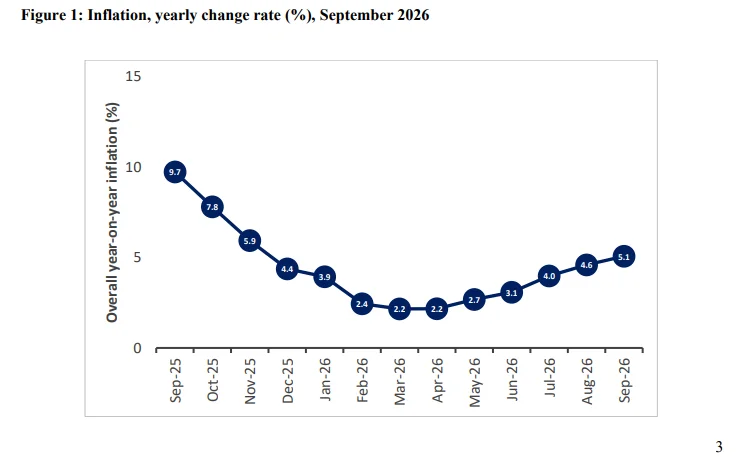
The Ghana Statistical Service (GSS) has reported that the year-on-year building cost inflation rate, measured by the Prime Building Cost Index (PBCI), rose to 5.1% in September 2026. This figure represents a 0.5 percentage point increase from the 4.6% recorded in August 2026. Despite the annual rise, the monthly inflation rate remained marginal, showing a slight increase of only 0.03% between August and September.
The increase in building costs was primarily driven by significant price hikes in plant and equipment, as well as construction materials. The plant and equipment category saw its inflation rate climb to 19.1% in September, up from 17.9% the previous month. Similarly, the material group experienced a rise in inflation to 6.5%, compared to 5.8% in August. Within the sub-groups, reinforcement recorded the highest inflation rate at 29.0%, reflecting sharp cost increases for critical structural components.
In contrast to the rising prices of equipment and some materials, the labour group provided some relief to developers with a year-on-year inflation rate of -3.2%. Certain key building materials also saw price declines, with cement inflation standing at -6.1% and steel at -8.8%. The GSS noted that while households are benefiting from lower costs for these specific structural inputs, these savings are being offset by notable price increases in other areas, such as plumbing, glazing, and floor tiles.
Overall, the GSS report highlighted that 14 out of the 23 construction sub-groups monitored by the PBCI recorded inflation rates exceeding the national average of 5.1%. The Prime Building Cost Index remains a vital tool for stakeholders in the construction industry, including investors, contractors, and policymakers, as it serves as a benchmark for budgeting, contract negotiations, and project planning in the building sector.
