••
Government Accelerates 24-Hour Economy Projects and Port Upgrades to Drive National Economic Growth
•3 min read•4 sources
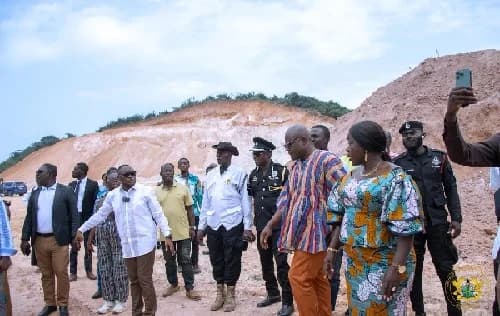
The government of Ghana is intensifying its efforts to revitalize the national economy through significant infrastructure investments in trade, industry, and logistics. Central to this strategy is the expansion of the '24-hour economy' model, highlighted by the progress of the Techiman 24-hour model market in the Bono East Region. During a recent inspection on September 8, 2025, Regional Minister Francis Owusu Antwi expressed satisfaction with the construction quality and pace, noting that the project is on track for completion within six months. This modern commercial hub is designed to support round-the-clock banking, cold storage, and security services, aiming to decongest existing facilities and establish Techiman as a premier trading center in West Africa.
In a parallel move to boost industrialization, Trade Minister Elizabeth Ofosu-Adjare recently inspected the site for a new garment factory in Cape Coast. This project follows a direct commitment from President John Mahama to enhance local textile production and create sustainable jobs. The factory, alongside the recently inaugurated Northshore Apparel Hub, is expected to generate thousands of employment opportunities while strengthening Ghana's export capacity. Minister Ofosu-Adjare emphasized that the government is following thorough implementation processes to ensure the facility meets international standards and serves as a catalyst for economic transformation in the Central Region.
Addressing critical bottlenecks in maritime trade, Transport Minister Joseph Bukari Nikpe has outlined a comprehensive plan to expand infrastructure at the Tema Port. Following a visit to the Meridian Port Services (MPS) Terminal, the Minister acknowledged that container congestion remains a significant challenge due to a disparity between rising cargo volumes and existing road capacity. To resolve this, the government plans to develop new berths and improve harbor access routes to streamline cargo movement. These upgrades are intended to reinforce Ghana's position as a dominant player in regional maritime trade and ensure that Terminal 3 reaches its full operational efficiency.
Further modernization efforts are extending to urban management in Kumasi, where the Kumasi Metropolitan Assembly (KMA) has announced a transition from static billboards to digital advertising boards starting in 2027. Mayor Richard Ofori Boadi Agyemang stated that this initiative aims to enhance the city's aesthetics and better organize outdoor advertising. The plan includes strict regulations for major corridors and the Central Business District, alongside the removal of aging or unauthorized structures. This shift toward digital infrastructure reflects a broader national trend of utilizing technology to improve urban governance and commercial visibility.
Together, these multi-sectoral initiatives underscore the Mahama administration's commitment to the 'Big Push Agenda,' focusing on job creation and infrastructure development. By addressing port congestion, modernizing urban advertising, and establishing 24-hour commercial hubs, the government aims to create a more resilient and efficient economic environment. Stakeholders across the garment, trade, and transport sectors have expressed support for these developments, which are expected to provide the necessary foundation for sustained regional economic growth and private sector investment.
Related topic
John Mahama: Latest News & Updates →

