••
GES Urges NGO Collaboration in Volta Region as GRA Boss Supports Upper Denkyira East Development
•2 min read•2 sources
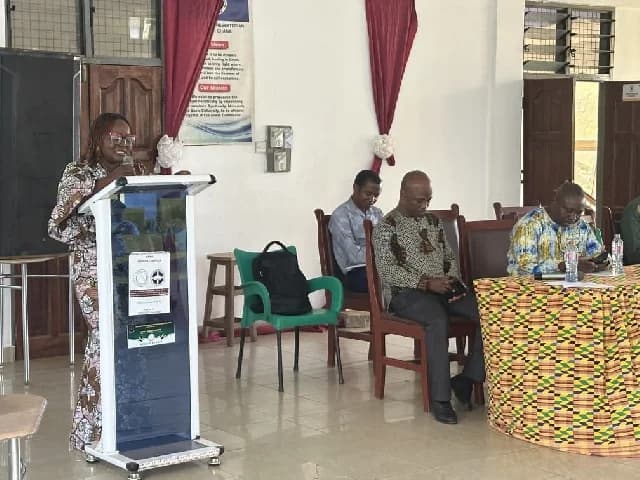
In a concerted effort to enhance regional development and educational infrastructure, the Ghana Education Service (GES) and key institutional leaders have called for deepened partnerships with non-governmental organizations (NGOs) and private funds. These initiatives, spanning from the Volta Region to the Upper Denkyira East Municipality, highlight a growing emphasis on collaborative resource mobilization to address critical gaps in education, healthcare, and community security. By aligning private contributions with public needs, officials aim to create a more robust framework for social welfare across the country.
In the Volta Region, Marian Jemima Akua Adzroe, the acting Regional Director of Education, has formally urged NGOs to align their interventions with GES priorities. Speaking at a recent stakeholders' meeting, Adzroe emphasized that while NGOs have made significant contributions to resource mobilization in underserved areas, better coordination is essential to prevent the duplication of efforts. She advocated for a transparent partnership framework that prioritizes foundational education and ongoing reforms in the secondary sector, ensuring that educational gains are sustained and that no child is left behind due to a lack of access or resources.
Complementing this drive for regional improvement, the Commissioner-General of the Ghana Revenue Authority (GRA), Anthony Kwasi Sarpong, has partnered with the Emelia Ankomah Education, Health and Welfare Fund to spearhead development projects in the Upper Denkyira East Constituency. The collaboration has recently resulted in the construction of a new mothers' hostel at the Dunkwa-on-Offin Municipal Hospital to support caregivers and the donation of a pickup vehicle to the local police command. Mr. Sarpong expressed his personal commitment to improving lives in his home community through these targeted interventions, which were welcomed by local leaders as vital for community welfare.
These developments underscore a broader national strategy where public institutions and high-ranking officials leverage private and non-profit partnerships to bolster the state's capacity. By fostering transparent frameworks for NGO engagement and encouraging targeted local philanthropy, stakeholders aim to create a more resilient support system for Ghana's social services. The success of these initiatives in the Volta and Central regions provides a blueprint for how coordinated community support can address the multifaceted needs of education, health, and public safety simultaneously.
Related topic
Ghana Customs Recruitment: Latest News & Updates →