••
ECOWAS Parliament Speaker and Vice-President Opoku-Agyemang Urge Decisive Regional Action on Climate Crisis
•2 min read•2 sources
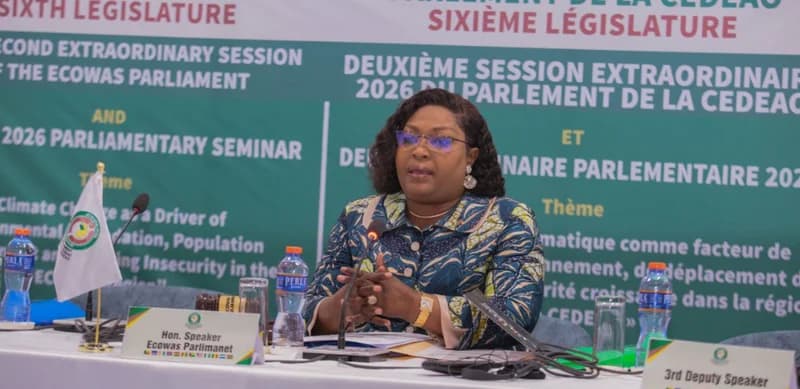
The Speaker of the ECOWAS Parliament, Hadja Mémounatou Ibrahima, has called for the immediate translation of climate knowledge into practical regional responses to protect West African communities from environmental degradation. Speaking at the opening of the Second 2026 Parliamentary Seminar in Accra on September 21, Ibrahima emphasized that climate change is no longer a distant threat but a lived reality. The seminar, which runs from September 21 to 27, 2026, serves as a critical platform for parliamentarians to collaborate with technical experts to address the region's escalating environmental vulnerabilities.
Throughout her address, Speaker Ibrahima highlighted the tangible and devastating impacts of climate change currently being felt across the ECOWAS sub-region, including sharp declines in agricultural productivity, severe coastal erosion, and frequent flooding. These factors have led to significant community displacement and heightened food insecurity. She urged participants to move beyond theoretical discussions and focus on actionable outcomes that merge scientific expertise with the localized experiences of the populations they represent. The seminar's agenda is set to cover diverse topics such as climate governance, financing, and the complex relationship between environmental shifts and regional security.
Adding to the call for regional synergy, Ghana’s Vice-President, Professor Naana Jane Opoku-Agyemang, addressed the seminar on September 22, stressing the interconnected nature of climate change, population displacement, and insecurity. She advocated for a holistic approach that includes investing in education and providing opportunities for the youth as a fundamental strategy for maintaining peace amidst environmental stress. Opoku-Agyemang further urged ECOWAS member states to ensure the effective implementation of regional frameworks, noting that without adequate resources and coordinated execution, policy documents would fail to protect the most vulnerable.
The seminar coincided with the celebration of Ghana’s Founder’s Day, providing a symbolic backdrop as Speaker Ibrahima honored the legacy of Osagyefo Dr. Kwame Nkrumah and his vision for a united, resilient Africa. By aligning the climate agenda with the spirit of Pan-Africanism, the event aims to foster a renewed sense of urgency in building regional resilience. The discussions and recommendations generated during this week-long session are expected to provide a roadmap for ECOWAS member states to strengthen their adaptation strategies and safeguard the livelihoods of millions across West Africa.


