••
Ghana's Healthcare Infrastructure: Dormaa Hospital Expands Services While Katamanso Health Centre Faces Critical Neglect
•2 min read•2 sources
Ghana’s healthcare landscape is currently witnessing a sharp contrast between proactive service expansion and critical infrastructure neglect. While the Dormaa Presbyterian Hospital is aggressively boosting its capacity to meet rising patient demands, concerns are mounting over the deteriorating state of the Katamanso Health Centre in the Kpone-Katamanso Constituency. These developments highlight the ongoing struggle to balance the need for specialized medical growth with the basic requirement of maintaining safe and functional primary health facilities for the population.
In the Bono Region, the Dormaa Presbyterian Hospital has initiated a major expansion of its emergency services and Out-Patient Department (OPD) following a significant surge in cases throughout 2025. The hospital’s General Manager, Prosper Apati, noted that the facility is increasingly burdened by non-communicable diseases (NCDs) such as hypertension and diabetes. To support this growth, ASA Savings and Loans Ltd recently donated essential healthcare equipment to the hospital. Mr. Apati emphasized that the facility serves not only the local community but also cross-border patients from neighbouring Côte d’Ivoire, making the expansion—and a proposed geriatric care facility for the elderly—a regional priority.
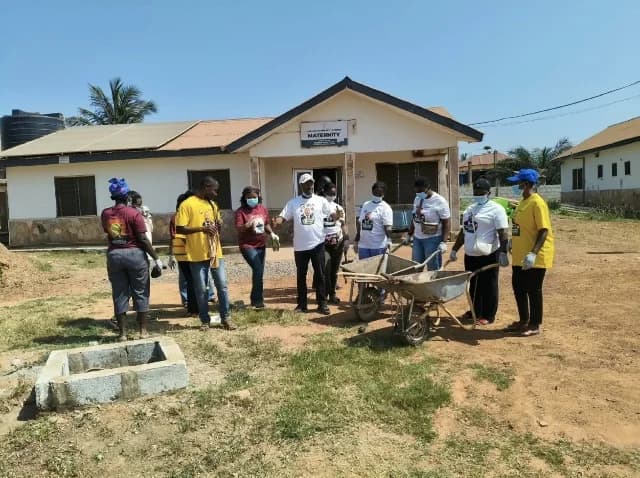
Conversely, the Katamanso Health Centre is currently under fire for failing to meet basic safety and sanitation standards. Abraham Aidoo, an aspiring independent parliamentary candidate, has raised alarms over the facility’s overgrown surroundings, which have reportedly become grazing grounds for livestock. Beyond the sanitation risks, the health centre is operating without a functional ambulance, leaving residents to rely on taxis for emergency medical transportation. Mr. Aidoo described the situation as a significant security and health threat to the large population dependent on the centre, calling for immediate intervention to restore reliable healthcare delivery.
These two scenarios underscore the broader challenges within the Ghanaian health sector: the vital role of private-sector support in bolstering infrastructure and the urgent need for consistent maintenance of existing facilities. While the progress at Dormaa provides a blueprint for community and corporate partnership, the crisis at Katamanso serves as a reminder that without functional emergency logistics and basic environmental upkeep, the safety of patients remains at risk. Addressing these disparities will be crucial for the health authorities as they work to ensure equitable access to quality care across both urban and rural districts.


