••
Karl Deisseroth, Peter Hegemann, and Georg Nagel Awarded 2026 Nobel Prize in Medicine for Brain Research
•2 min read•2 sources
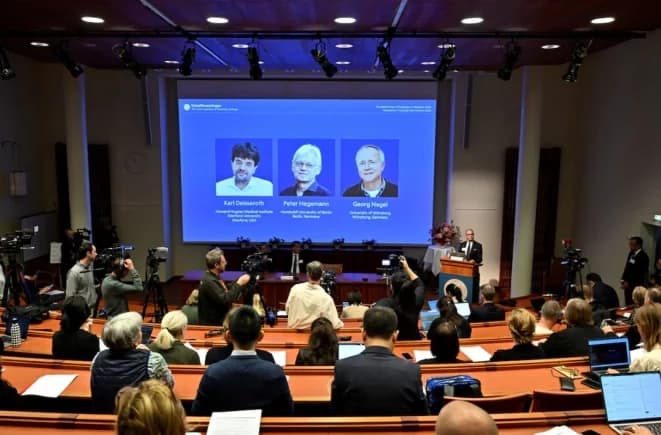
The Nobel Assembly at the Karolinska Institute has awarded the 2026 Nobel Prize in Physiology or Medicine to German scientists Peter Hegemann and Georg Nagel, along with American researcher Karl Deisseroth. The trio was recognized for their pioneering work in optogenetics, a revolutionary technology that allows scientists to control the activity of individual nerve cells using light. This breakthrough has fundamentally transformed neuroscience by providing a precise tool to explore how specific neural circuits influence complex functions such as memory, emotion, and behavior within a living brain. At the heart of their discovery is the use of channelrhodopsin, a light-sensitive protein found in algae. Hegemann and Nagel were instrumental in identifying these proteins and demonstrating how they could function as light-controlled switches when inserted into nerve cells. Deisseroth further advanced the field by applying these findings to complex neural systems, enabling researchers to "turn on" or "turn off" specific neurons with laser light. This level of precision was previously impossible, allowing for a much deeper understanding of the biological underpinnings of various neurological and psychiatric conditions. Upon receiving the news, the laureates expressed surprise and honor. Deisseroth noted the long and challenging journey of their research, while Nagel, receiving the call while on a terrace in Italy, shared his delight at being recognized alongside his colleagues. To commemorate the 125th anniversary of the Nobel Prizes, the Nobel Foundation increased the award amount this year to 12 million Swedish crowns, approximately 1.2 million US dollars. The winners are set to receive their medals and diplomas during the formal prize presentation ceremony on December 10, the anniversary of Alfred Nobel’s death. The implications of optogenetics extend far beyond basic research. The technology holds significant promise for medical breakthroughs, including potential treatments for restoring vision in patients with certain types of blindness and addressing severe mental health disorders. This announcement marks the start of the 2026 Nobel season, with further awards in Physics, Chemistry, Literature, Peace, and Economics scheduled for the coming days. The scientific community views this recognition as a validation of a field that has already revolutionized how we perceive the complexity of the human mind.
