••
Karl Deisseroth, Peter Hegemann, and Georg Nagel Win 2026 Nobel Prize in Medicine for Optogenetics Breakthroughs
•2 min read•2 sources
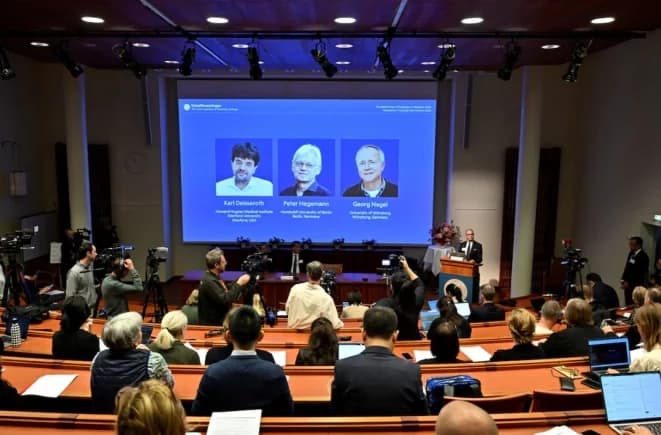
The Nobel Assembly at the Karolinska Institute has awarded the 2026 Nobel Prize in Physiology or Medicine to American scientist Karl Deisseroth and German researchers Peter Hegemann and Georg Nagel. The trio was honored for their pioneering work in optogenetics, a revolutionary technique that uses light to control the activity of nerve cells. This discovery has transformed neuroscience by allowing researchers to observe and manipulate the specific neural circuits that govern memories, emotions, and complex behaviors in living organisms with unprecedented precision.
The foundation of their work lies in the discovery and application of channelrhodopsin, a light-sensitive protein originally found in algae. By incorporating these proteins into neurons, the researchers created "light-controlled switches" for brain cells. This breakthrough has paved the way for profound medical advancements, including the potential to restore vision in blind patients and the development of new treatments for a wide range of neurological and psychiatric disorders. The Nobel Foundation highlighted that the laureates' contributions have provided the scientific community with essential tools to decode the functional architecture of the brain.
In celebration of the 125th anniversary of the Nobel Prizes, the award amount for 2026 was increased to 12 million Swedish kronor (approximately $1.2 million). The winners expressed significant surprise and gratitude upon receiving the news; Dr. Deisseroth described the honor as a profound recognition of their collective effort, while Dr. Nagel received the call while on vacation in Italy. The laureates emphasized that their success was the result of a long and challenging scientific journey, requiring decades of perseverance to translate basic biological observations into a transformative research methodology.
This announcement marks the beginning of the 2026 Nobel season, with further prizes in Physics, Chemistry, Literature, Peace, and Economics scheduled for reveal throughout the following week. The formal award ceremony will take place on December 10, the anniversary of Alfred Nobel’s death. As the global scientific community celebrates these achievements, the focus remains on the expanding applications of optogenetics, which continues to drive innovation in medical research and the ongoing pursuit of understanding the complexities of the human mind.
