••
Copernicus Climate Service Declares August 2026 Hottest Month Ever Recorded Globally
•2 min read•1 source
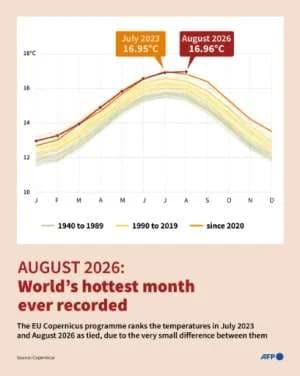
Global temperatures reached an unprecedented peak in August 2026, marking it as the hottest month ever recorded in human history. According to data from Europe’s Copernicus Climate Change Service, the average global temperature reached 16.96°C, shattering the previous record established in July 2023. This climatic milestone coincided with a summer of extreme weather events, including intense heatwaves and devastating wildfires that have particularly impacted Western Europe and the contiguous United States.
Climate scientists attribute this alarming spike in temperature to the dual impact of long-term human-induced climate change and the emergence of a powerful El Niño weather pattern. The ongoing burning of fossil fuels remains the primary driver of the underlying warming trend, while the intensifying El Niño—characterized by the warming of surface waters in the Pacific Ocean—has added significant momentum to the record-breaking heat. Experts noted that the synergy between these two factors created the atmospheric conditions necessary for the historic temperatures observed throughout the month.
The outlook for the near future remains concerning as the current El Niño is expected to reach its peak later this year. The Copernicus Climate Change Service warns that without immediate and substantial reductions in global greenhouse gas emissions, these record-high temperatures will likely become a recurring reality rather than an anomaly. Furthermore, early projections for 2027 suggest it could potentially set even higher records as the compounding effects of global warming and the tail end of the El Niño cycle continue to influence global weather systems. This trend underscores an urgent need for global climate action to mitigate the escalating risks of extreme heat and its associated environmental consequences.

