••
Bono East Regional Minister Addresses Severe Teacher Deficits and Infrastructure Challenges in Pru and Sene Districts
•3 min read•21 sources
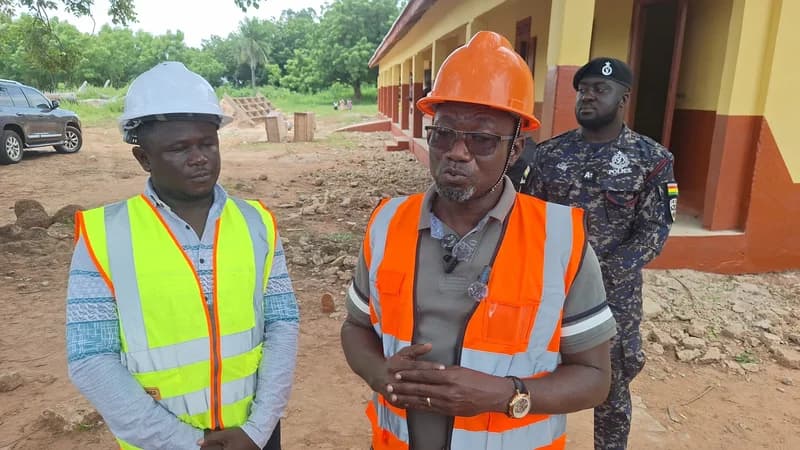
The Bono East Region is currently grappling with a significant educational crisis, as the Pru East, Pru West, and Sene West districts face acute teacher shortages and a lack of basic infrastructure. Despite ongoing government efforts under President John Dramani Mahama’s administration to eliminate "schools under trees," local education directors report that hundreds of teaching positions remain vacant, and dozens of schools still operate without permanent classrooms. Regional Minister Francis Owusu Antwi has been conducting inspection tours across these districts to monitor progress on new classroom blocks, while simultaneously demanding higher construction standards and greater urgency from contractors to meet the needs of thousands of students.
In the Pru East District, Education Director Sylvester Tabiasi-Naa revealed a staggering deficit of 376 teachers and a shortage of nearly 3,000 pieces of furniture. Currently, 19 schools in the district are forced to hold classes outdoors, a situation mirrored in the Sene West District, where approximately 35 schools operate under trees. Sene West Education Director Seidu Iddrisu Bawa highlighted the severe impact on academic performance, noting that students in riverine communities often lose critical contact hours whenever it rains. Although some new teachers were posted this year—such as the 23 assigned to Sene West and 12 to Pru West—these numbers fall far short of the demand, especially as many existing staff members frequently apply for transfers out of these remote areas.
Infrastructure improvements are underway, but they have not escaped criticism. During an inspection in Pru West, Minister Antwi expressed dissatisfaction with the quality of some projects and the slow pace of work. He specifically directed contractors to ensure that all new classrooms are disability-friendly and built with durable materials. In Sene West, the District Chief Executive, Khaari Fuseini, announced the construction of a modern block for Banyarko D/A Primary School, which will include dedicated washrooms and changing rooms. These facilities are designed to improve school attendance for girls during their menstrual cycles, addressing a key barrier to gender-equitable education in the region.
To mitigate the immediate crisis, local leaders are turning to community-based solutions. In Pru East, the Member of Parliament is currently funding 11 volunteer teachers to fill gaps in remote schools. Educational authorities across the three districts are now calling for a policy shift toward localized recruitment, urging the government to prioritize the employment of trained teachers from the area who are more likely to remain in their postings. Minister Antwi concluded his tour by emphasizing that while the government will continue to provide infrastructure, the responsibility for maintaining these facilities rests with the local communities to ensure they serve future generations of Ghanaian students.


