••
Ministers Ibrahim and Buah Champion Technical Education and Infrastructure Completion in Bono and Western Regions
•2 min read•8 sources
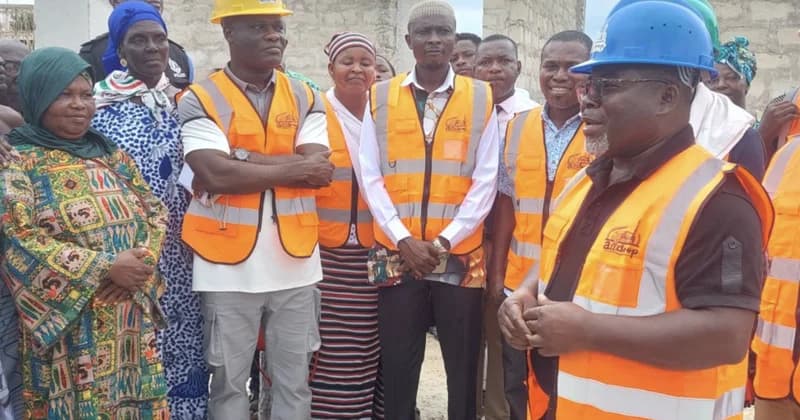
Government ministers under President John Mahama have intensified efforts to enhance Ghana's educational infrastructure, emphasizing the completion of long-stalled projects and the expansion of technical and STEM training. In recent engagements across the Bono and Western regions, Minister for Works, Housing and Water Resources Ahmed Ibrahim and Minister for Lands and Natural Resources Emmanuel Armah-Kofi Buah highlighted the administration’s commitment to using the Ghana Education Trust Fund (GETFund) to drive economic transformation through youth empowerment. The ministers emphasized that prioritizing practical skills is essential for modernizing the national workforce.
In the Ellembelle District, Minister Emmanuel Armah-Kofi Buah commissioned a 12-unit classroom block at the Kikam Technical Institute (KIMTECH), a project that had remained dormant since 1973. Revived and completed in 2025 under President Mahama’s leadership, the facility represents a broader policy to finish abandoned infrastructure before initiating new developments. Buah noted that this approach ensures value for money and optimal resource allocation, while also promising additional industrial machinery for the institute to bolster technical training and combat regional unemployment. The Western Regional Director of TVET praised these advancements, noting the critical role of technical institutes in providing viable career paths for the youth.
Similarly, in the Banda District of the Bono Region, Minister Ahmed Ibrahim conducted an inspection of ongoing GETFund projects at Bandaman Senior High Technical School. The developments include new dormitory blocks, a kitchen, and a modern science laboratory designed to position the school as a premier technical institution. Ibrahim urged local stakeholders and traditional leaders to prioritize STEM education, arguing that equipping young people with scientific and technological skills is essential for unlocking the district’s economic potential and ensuring students are globally competitive. He stressed that stakeholder collaboration is the cornerstone of sustainable educational growth.
These initiatives have received strong backing from traditional authorities and educational administrators. Tolee Pe Aboatia II, Acting President of the Banda Traditional Council, and regional education officials have both called for increased community and industry collaboration to sustain these advancements. By aligning educational infrastructure with industry needs and focusing on practical vocational skills, the government aims to create a sustainable pipeline of skilled labor that directly addresses the nation’s unemployment challenges while maximizing the utility of existing state resources.
Related topic
John Mahama: Latest News & Updates →
