••
Bank of Ghana issues 20-point advisory against digital fraud and Ponzi schemes
•2 min read•2 sources
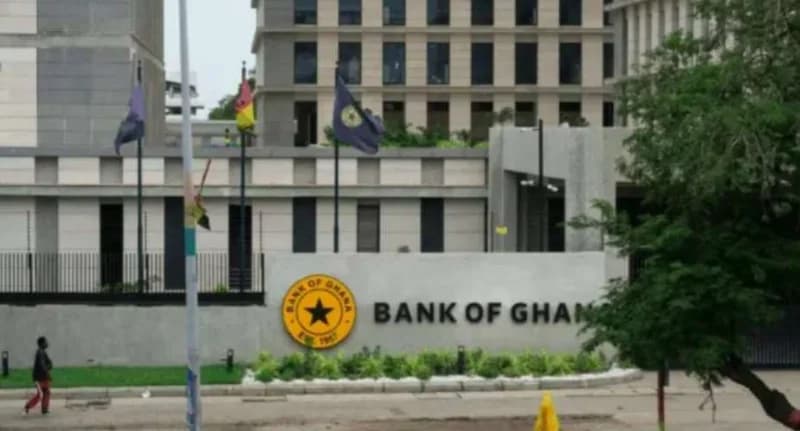
The Bank of Ghana (BoG) has released a comprehensive 20-point public advisory targeting the rising incidence of digital financial fraud and "money-doubling" Ponzi schemes. Released on October 7, 2026, the directive serves as a crucial intervention to protect consumers as mobile money and online banking usage continues to expand across the country. The central bank emphasized that increasing financial literacy is the most effective defense against sophisticated scams targeting unsuspecting citizens.
The advisory provides practical safeguards for users of digital financial services, specifically warning against the sharing of sensitive information such as Personal Identification Numbers (PINs) and passwords. According to the BoG, legitimate financial institutions will never request personal data, credentials, or transaction validation through unsolicited phone calls, text messages, or emails. Consumers are urged to remain skeptical of any individual or entity claiming to represent a bank while soliciting such confidential information.
Beyond individual account security, the BoG raised alarms regarding fraudulent investment opportunities that promise unrealistic returns. These "money-doubling" schemes often masquerade as legitimate business ventures but are designed to defraud participants of their capital. The central bank advised the public to rigorously verify the licensing status of any investment firm before committing funds and to regularly monitor their account statements to detect any unauthorized activities or discrepancies early.
The central bank highlighted that combating financial crime is a collective responsibility involving banks, service providers, and the general public. By prioritizing cybersecurity education and promoting a culture of vigilance, the BoG aims to strengthen the integrity of Ghana's digital financial ecosystem. The advisory concludes by encouraging stakeholders to collaborate on continuous security awareness programs to ensure that the benefits of financial inclusion are not undermined by criminal activities.

