••
Speaker Bagbin Urges OSP Probe into Parliamentary Memo as President Mahama Outlines $10B New Economy Agenda
•2 min read•6 sources
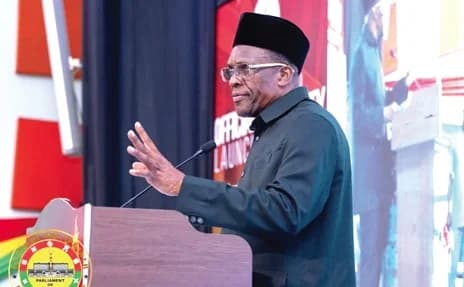
The Speaker of Parliament, Alban Sumana Kingsford Bagbin, has formally requested the Office of the Special Prosecutor (OSP) to conduct a swift and thorough investigation into a controversial memorandum involving Deputy Minority Leader Patricia Appiagyei. The disputed document alleges that Appiagyei rejected a GH₵70,000 payment linked to a vetting exercise—a claim the MP has categorically denied as false. Speaker Bagbin emphasized Parliament’s commitment to transparency, warning of the serious legal implications of document fabrication and urging the public and media to avoid premature conclusions until the OSP verifies the document's authenticity and source.
On the economic front, the administration is moving forward with its transformative agenda under President John Dramani Mahama, who has announced a US$10 billion investment to support a "New Economy" program. Finance Minister Dr. Cassiel Ato Forson revealed that the National Development Planning Commission (NDPC) will be tasked with tracking the implementation of this program, which focuses on production, job creation, and wealth generation beyond simple economic stabilization. While the plan has received endorsements from analysts like Sekou Nkrumah, particularly regarding the 24-hour economy policy, experts have cautioned that its success depends on significant improvements to Ghana’s industrial infrastructure and energy capacity.
Concurrent with these economic initiatives, a sharp debate has emerged over the performance of state-owned enterprises (SOEs). A heated exchange on JoyNews’ Newsfile saw IMANI Africa Vice President Bright Simons clash with Prof. Michael Kpessa-Whyte of the State Interests and Governance Authority (SIGA) over a report claiming a net profit of GH₵19.8 billion for SOEs in 2025. While SIGA defends the integrity of these figures as evidence of a financial turnaround, Simons has questioned the underlying methodology and data accuracy, reflecting broader tensions between civil society oversight and government reporting.
To address systemic inefficiencies, the government has officially launched the second phase of the National Public Sector Reform Strategy. Led by Minister Lydia Lamisi Akanvariba, the reforms aim to leverage digital technologies to improve transparency, accountability, and institutional performance across public services. These combined efforts—from the OSP's investigative oversight to the NDPC's monitoring of the US$10 billion investment—represent a multi-faceted approach by the current administration to strengthen governance and stimulate sustainable growth in the face of public and institutional scrutiny.
Related topic
John Mahama: Latest News & Updates →

