••
CSOs Demand Transparency and Job Creation as Finance Minister Dr. Cassiel Ato Forson Prepares 2027 Budget Statement
•3 min read•9 sources
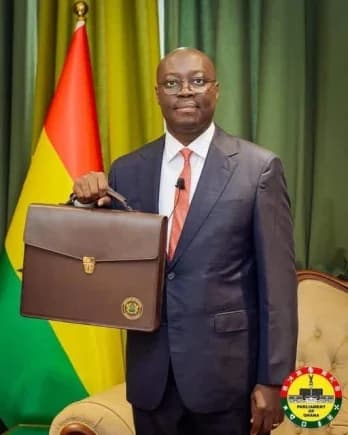
As the November presentation of the 2027 Budget Statement and Economic Policy approaches, civil society organizations (CSOs) are intensifying calls for the government to prioritize job creation, revenue mobilization, and fiscal transparency. Led by the Economic Governance Platform and the Tax Justice Coalition, these groups have urged Finance Minister Dr. Cassiel Ato Forson to leverage current macroeconomic stability to enhance public welfare. Key recommendations presented to the Ministry of Finance include closing tax loopholes, managing mineral revenues through a unified framework, and incentivizing contributions from the artisanal mining sector to curb illicit financial flows. Parallel to these fiscal demands, the Ghana Anti-Corruption Coalition (GACC) has raised alarms over a significant spike in financial irregularities within public institutions, which surged to GH¢20.49 billion according to the 2025 State of Corruption Report.
To address these systemic vulnerabilities, CSOs are advocating for the immediate passage of the Conduct of Public Officers (CoPO) Bill. This legislation is seen as vital for strengthening asset declaration compliance and enhancing whistleblower protections. This push for accountability is echoed by the Public Interest and Accountability Committee (PIAC) as it celebrates its 15th anniversary. Government officials and stakeholders, including Prof. Francis Dodoo and Isaac Adongo, Chairman of the Parliamentary Select Committee on Finance, are calling for PIAC’s mandate to be expanded beyond petroleum to include critical minerals and the global energy transition. Proponents argue that broadening this oversight and ensuring PIAC's financial independence are essential for translating natural resource wealth into sustainable developmental outcomes like infrastructure and permanent jobs.
Regarding the implementation of flagship policies, Presidential Advisor on the 24-Hour Economy Augustus Goosie Tanoh has provided critical clarifications on the jurisdiction of the 24-Hour Economy Authority. Mr. Tanoh noted that while 262 Metropolitan, Municipal, and District Assemblies (MMDAs) are currently operating 24-hour markets, these initiatives fall under the Ministry of Local Government and are funded via the District Assemblies Common Fund rather than the Authority itself. Despite this distinction, the 24-Hour Economy Authority has faced legal challenges over the market programs. Mr. Tanoh emphasized that the Authority's focus remains on enhancing supply-chain efficiency and infrastructure, such as cold storage, to support the broader national economic agenda.
Governance reforms also remain a point of contention, particularly concerning local government autonomy and the protection of digital rights. The Institute for Democratic Governance (IDEG) has formally expressed opposition to the government's proposal for the President to nominate candidates for District Chief Executives (DCEs), arguing that direct elections are necessary to ensure true democratic accountability. Meanwhile, the Data Protection Commission is ramping up its regulatory capacity, designating 2026 as the "Year of Enforcement." With the acquisition of new specialized vehicles, Deputy Minister of Communications Mohammed Adams Sukparu stated that the Commission will expand its regional presence to ensure stricter compliance with the Data Protection Act. Together, these developments highlight a complex political landscape where the Mahama administration must balance ambitious economic programs with increasing demands for institutional integrity and democratic decentralization.


