••
Minister Armah-Kofi Buah Leads Ghana’s Push for Value-Added Mining Partnerships in China and Australia
•2 min read•6 sources
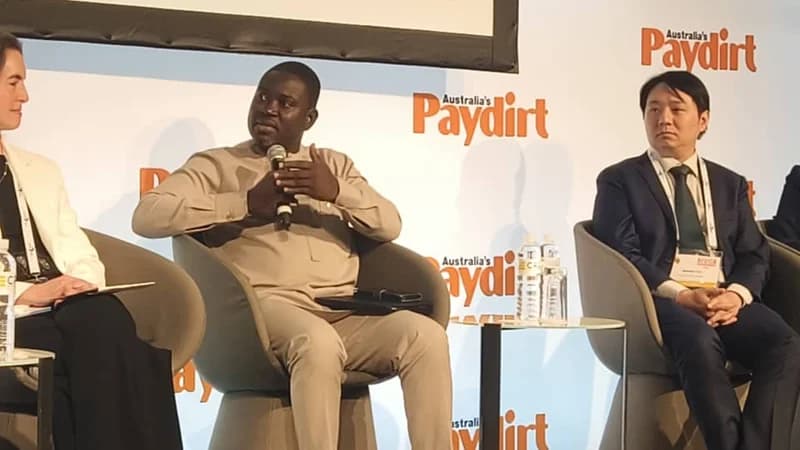
Ghana has launched an aggressive international campaign to transform its mining sector from a raw material exporter into a value-addition hub. Speaking at the 28th China Mining Conference in Tianjin and the Africa Down Under (ADU) Summit in Perth, Minister for Lands and Natural Resources Emmanuel Armah-Kofi Buah, representing President John Mahama, emphasized a strategic shift toward local processing and technology transfer. This new directive is underscored by a recent Ghana Gold Board ban on the export of raw gold dore, effective September 1, 2026, signaling the government's commitment to retaining wealth and creating sustainable jobs within the country. At the ministerial forum in Tianjin, Minister Buah urged Chinese investors to look beyond extraction, proposing a new era of partnership focused on refining, industrialization, and the modernization of mining practices. He highlighted specific opportunities in gold refining, iron ore development, and integrated aluminum industries, arguing that sustainable partnerships must prioritize skills development for Ghanaians and the establishment of local supply chains. This outreach leverages a six-decade relationship with China to foster win-win cooperation in intelligent mining and geological data management, ensuring that the benefits of mineral wealth extend long after individual mines cease operations. Simultaneously, a Ghanaian delegation led by High Commissioner to Australia, Doris Brese, and Minerals Commission Deputy Chief Executive, Maxwell Yao Akpene Klu, courted investors in Perth. Ghana is positioning itself as a strategic hub for the global green energy transition, highlighting its substantial reserves of lithium, bauxite, and other base metals essential for battery technology. The delegation showcased improvements in Ghana’s legal frameworks and governance under the Mahama administration, aiming to provide a stable, transparent, and proactive environment for high-tech mining investments. Beyond high-level investment, the government is focusing on internal reforms to ensure industry sustainability. Minister Buah detailed plans to formalize artisanal and small-scale mining to improve transparency and environmental responsibility. By integrating digital traceability and intelligent mining practices, Ghana aims to mitigate the ecological impact of extraction while maximizing local expertise and industrial development. The overarching goal is to treat mineral resources as a vital inheritance for future generations, requiring a balance between aggressive industrial growth and rigorous environmental stewardship.
Related topic
John Mahama: Latest News & Updates →Live rates
Ghana gold price →

