••
Algerian Parliament Approves Death Penalty for Arson as Tunisia Eases Controversial Cybercrime Laws
•3 min read•4 sources
In a series of significant legislative shifts across North Africa, Algeria has moved to impose the death penalty for forest arsonists, while Tunisia has softened a contentious decree governing online speech. These legal developments coincide with a growing continental discourse on the necessity of intelligence-led governance, as analysts advocate for the application of ancient strategic principles to modernize African national security frameworks. The divergent approaches reflect the complex balancing act between state security, environmental protection, and the preservation of civil liberties in the region.
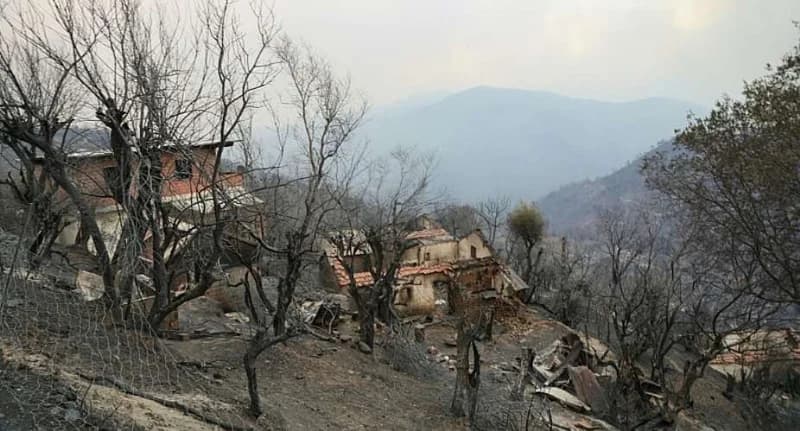
Algeria's National Assembly recently adopted a law expanding the use of capital punishment to include individuals convicted of starting forest fires, a response to recent deadly blazes that claimed at least 12 lives. The legislation, which also classifies child abduction involving torture or sexual assault as a capital offense, was championed by Justice Minister Lotfi Boudjemaa as a necessary deterrent against organized crime. While the government has suggested potential foreign involvement in the fires, the move has drawn sharp criticism from Amnesty International, which labeled the law a regressive step and urged the Algerian government to prioritize preventative safety measures instead. The bill now heads to the Senate before final ratification by President Abdelmadjid Tebboune.
Contrasting with Algeria's hardening stance, Tunisian President Kais Saied has amended a controversial cybercrime decree that had been widely used to stifle political dissent. Since its introduction in 2022, the decree had authorized heavy penalties for the dissemination of what the state deemed "fake news." Following sustained pressure from international and domestic rights organizations, Saied has removed the five-year prison penalty associated with the law. This shift is seen as a cautious concession to activists who argued the original decree served primarily as a tool for suppressing freedom of expression and targeting government critics.
Beyond these specific legal changes, a broader strategic conversation is emerging regarding the future of African statecraft. Recent analysis highlights the relevance of Sun Tzu’s "The Art of War" in addressing contemporary security threats such as extremist insurgencies and transnational organized crime. The discourse emphasizes that intelligence should be viewed not merely as a military function but as the foundational pillar of national strategy. By prioritizing human intelligence (HUMINT) and inter-agency coordination, experts argue that African states can better achieve the Sun Tzu principle of "knowing the enemy and knowing oneself," thereby fostering more resilient and ethically governed security architectures.
Ultimately, these developments underscore the varying paths African nations are taking to address internal and external threats. While Algeria seeks to curb environmental and social crimes through high-stakes deterrence, Tunisia’s adjustment suggests a recognition of the limits of digital repression. As the continent faces increasingly complex security challenges, the integration of robust intelligence frameworks with democratic oversight remains a critical objective for ensuring long-term regional stability and national resilience.
