••
Minister Ahmed Ibrahim Launches Kaneshie Flood Control Project Amid National Infrastructure Push
•3 min read•8 sources
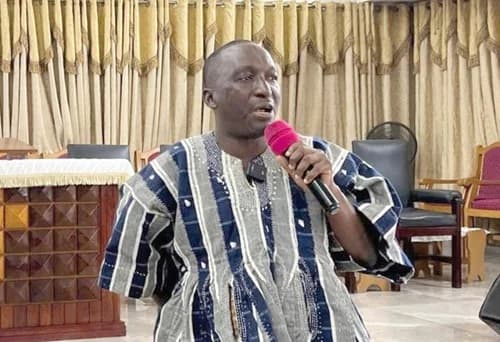
The Minister of Works, Housing and Water Resources, Ahmed Ibrahim, has officially assumed office under the administration of President John Mahama, pledging a non-partisan mission to tackle Ghana’s housing deficit and infrastructure challenges. Taking over from Gilbert Kenneth Adjei, who now serves as the Defence Minister, Mr. Ibrahim emphasized that resolving national housing issues requires bipartisan cooperation and a political will that extends beyond electoral cycles. His first major undertaking is the launch of critical drainage improvement works in the Kaneshie enclave, a project scheduled to begin on September 7, 2026, aimed at mitigating the perennial flooding that has long plagued the capital. The Kaneshie project, part of the Greater Accra Resilient and Integrated Development (GARID) initiative, involves constructing a 10-meter-wide double-cell underground stormwater drain to replace existing inadequate systems. This follows a devastating flood in June 2026 that caused significant loss of life and property. To facilitate the construction, sections of the Dr Busia Highway will be closed in phases, with the first phase expected to last until late 2026 and the final completion set for October 2027. This infrastructure push aligns with long-standing calls from Lions Clubs International, whose District Governor Ebo Prah Manson has urged the government to prioritize permanent flood prevention measures, such as clearing blocked watercourses, over temporary disaster relief efforts. While the government advances new projects, current road developments are facing increased scrutiny. The Minister of Roads and Highways, Governs Kwame Agbodza, recently expressed frustration over the slow progress of the 17-kilometre Tema-Roundabout to Dawhenya road rehabilitation. Despite being initiated in 2020, the project remains less than 25% complete, leading the Minister to demand that contractors increase manpower to alleviate public traffic distress. Simultaneously, the Public Utilities Regulatory Commission (PURC) has announced plans to mandate better coordination between road contractors and utility providers to prevent damage to water and power lines, an issue that has frequently disrupted services during the government’s ‘Big Push’ infrastructure programme. At the local level, development efforts are being mirrored by the Ablekuma North Municipal Assembly. Municipal Chief Executive Kalamu Musah Adamu recently detailed a suite of projects including the construction of 300 boreholes, a new clinic, and educational facilities to improve living standards. However, experts suggest that local impact could be enhanced through systemic reform. Professor Joseph Atsu Ayee of the University of Ghana has advocated for a restructuring of the decentralization system to grant local authorities greater autonomy and accountability. These reforms, discussed at a recent Citizen Forum in Accra, seek to address funding constraints and ensure that local governance remains inclusive and resilient through various political transitions.
Related topic
John Mahama: Latest News & Updates →

