••
African Youth Leaders Adopt Legon Declaration in Bold Push for Reparations and Economic Sovereignty
•2 min read•5 sources
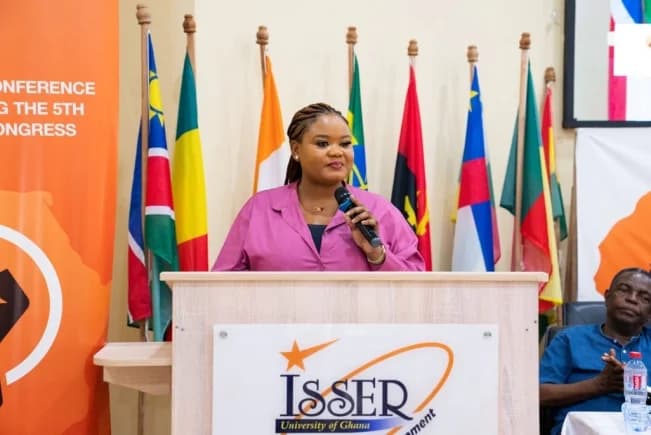
At a landmark International Youth Forum held in Accra, over 200 delegates from across the continent have adopted the Legon Declaration, a comprehensive manifesto demanding debt cancellation, reparations for colonial-era injustices, and an immediate end to neo-colonial exploitation. Organized by the Pan-African Progressive Front, the forum served as a rallying point for a new generation of activists committed to dismantling the systemic barriers that have long hindered Africa’s growth. The declaration specifically targets the CFA Franc and advocates for the establishment of a micro-lawsuit mechanism to challenge exploitative international agreements, marking a significant escalation in youth-led advocacy for continental justice.
Dr. Abu Sakara Foster, founder of the National Interest Movement, challenged the youth during the Accra dialogue to take direct charge of the continent's liberation. He emphasized that true freedom remains elusive due to global constraints on trade and resource management that continue to suppress African economies. Dr. Sakara called for the dismantling of these restrictive economic and political structures, urging the youth to seek practical integration with the global African diaspora. He argued that leveraging the resources and knowledge of the diaspora is essential for building sustainable, self-reliant communities that can redefine Africa's future trajectory.
Adding weight to these calls, veteran Pan-Africanist and journalist Kwesi Pratt Jnr urged African nations to reclaim their natural resources and reject Western economic models that do not serve local interests. Speaking at the forum, Pratt criticized the tendency of African governments to sign disadvantageous agreements with foreign powers, specifically highlighting the dilemma surrounding the potential privatization of the Volta Aluminium Company (VALCO). He stressed that reparations must be viewed holistically—not just as financial compensation, but as a total reclaiming of sovereignty and a critical re-evaluation of educational curricula that still carry colonial biases.
The movement arrives at a time of growing awareness regarding the irony of Africa’s "abundance," where the continent possesses vast natural wealth yet remains underdeveloped. This sentiment was echoed by the UN-supported "Correct the Map" initiative, which points out that even geographical representations like the Mercator projection have historically minimized Africa's actual size and importance. By aligning geographical correction with economic and political reform, the youth delegates in Accra signaled a unified commitment to shifting the continent from a supplier of raw materials to a hub of industrialization and self-determined progress, ensuring that future generations are no longer "thirsty beside a river of abundance."

