••
Africa’s $9 Trillion Lithium Wealth Offers Path to Curb Rising Youth Emigration Trends
•2 min read•2 sources
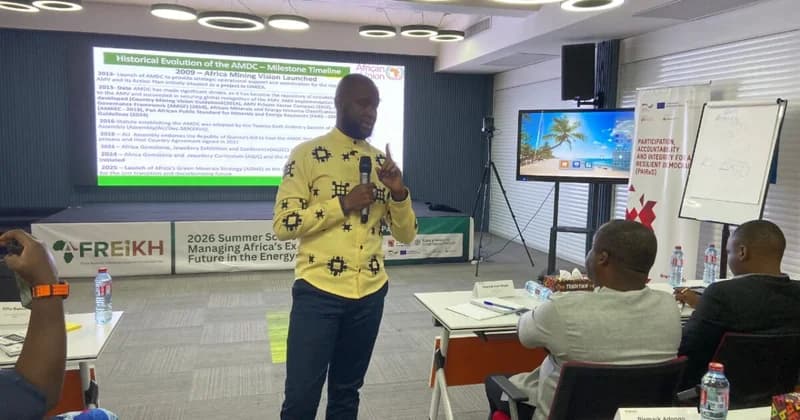
Africa stands at a critical economic crossroads as experts highlight a staggering US$9 trillion lithium potential that could serve as the catalyst for domestic industrialization and job creation. At a recent Summer School on Managing Africa’s Extractive Future organized by the Africa Centre for Energy Policy (ACEP) in Accra, energy economists argued that the continent’s economic fortunes depend on shifting from being a mere exporter of raw minerals to controlling the entire lithium value chain. By specializing in segments ranging from machinery manufacturing to financial services, African nations could foster a self-sustaining market that generates the high-skilled employment opportunities currently lacking across the region.
The urgency of this economic transformation is underscored by a recent Afrobarometer survey, which reveals that over half of Africa’s youth are considering emigration. The data, discussed during a webinar co-hosted by the Nuru Trust Network for International Youth Day, indicates that 55% of people aged 18 to 35 across 38 African countries have contemplated leaving their home nations. Crucially, 52% of those respondents cited the search for better work and economic opportunities as their primary motivation, highlighting a massive disconnect between the continent’s natural resource wealth and the lived economic reality of its youngest citizens.
Nkuli Ncobe, a prominent voice from Zimbabwe speaking at the ACEP event, emphasized that the solution lies in a coordinated regional strategy. Instead of individual countries operating in isolation, a synchronized approach to the lithium industry would allow for shared technological advancements and regional integration. This industrial roadmap aims to address the weak employment prospects and gender inequalities that currently drive migration. Advocates argue that if African leaders can successfully convert mineral wealth into locally owned industries, migration would become a choice rather than a necessity driven by economic desperation.
The challenge for the continent's leadership, including the administration of President John Mahama in Ghana and his regional counterparts, is to bridge the gap between extractive potential and human development. As the global energy transition accelerates, the demand for lithium provides a unique window to build sustainable industries. Transforming these resources into shared prosperity is no longer just an economic goal but a social imperative to retain the continent's most valuable asset—its youth—and ensure that Africa’s mineral bonanza translates into a global economic powerhouse.
Related topic
John Mahama: Latest News & Updates →

