••
International Partnerships and Local Initiatives Set to Drive Economic Growth and Energy Reliability Across Africa
•2 min read•4 sources
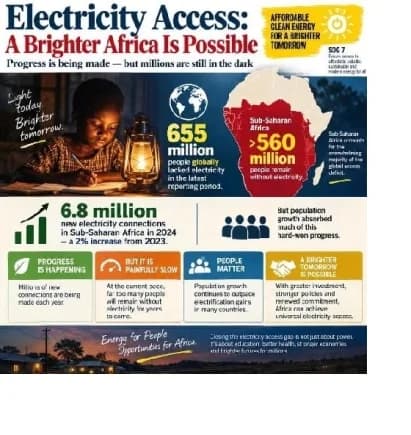
Across sub-Saharan Africa, a new wave of development initiatives is targeting the core pillars of economic growth: energy reliability, small business finance, and agricultural excellence. While the region continues to struggle with electricity access—with over 560 million people still off the grid—the focus is shifting toward ensuring that power is not only available but reliable and affordable. In Ghana and South Africa, where access rates are higher, frequent outages remain a primary hurdle for industrial productivity. Experts argue that a transition to more reliable energy services by 2030 is essential to support the continent's burgeoning business and agricultural sectors.
To address financial barriers, the International Trade Centre (ITC) and Access Bank have launched a strategic partnership to boost Small and Medium-sized Enterprises (SMEs) across 14 African countries. Starting with a pilot program in Ghana scheduled to run from September 2026 to June 2027, the initiative prioritizes women-led businesses. The partnership aims to enhance access to finance, build capacity, and improve market access, aligning with the UN Sustainable Development Goals to foster job creation and long-term economic sustainability for small businesses.
Domestic efforts in Ghana are also gaining momentum, particularly in the agricultural and community development sectors. The Ministry of Food and Agriculture, in collaboration with private partners including Mehak Company Limited and Covenant Farms, has announced a historic prize package for the 2026 National Best Farmer. The winner will receive GH₵1.2 million, a Nissan Navara pickup, a tractor, and an all-expenses-paid seven-day trip to Italy to study modern agritech. This move is designed to incentivize sustainable practices and recognize the critical role farmers play in national food security.
Simultaneously, grassroots empowerment is taking center stage in Northern Ghana through the ‘Ting Labginsim’ initiative. Launched in the West Mamprusi Municipality, the program targets 100 communities with a combined investment exceeding US$840,000. Supported by the Advocates for Community Alternatives (ACA) and local assembly funds, the project provides US$8,000 microgrants to each community to address self-identified needs in sanitation, water, and hygiene (WASH) services. These multi-sectoral advancements reflect a broader continental strategy to combine high-level financial partnerships with community-driven solutions to achieve sustainable development.

