••
African Development: Tackling Energy Poverty, Modernizing Agriculture, and Enforcing Environmental Standards
•2 min read•3 sources
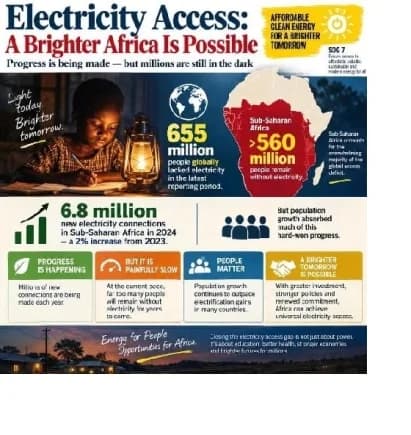
Africa is navigating a complex landscape of development, balancing the urgent need for infrastructure expansion with the modernization of key industries and the enforcement of environmental regulations. Central to this transformation is the dual challenge of electricity access and reliability across the continent. While countries like Ghana and South Africa have achieved relatively high access rates, sub-Saharan Africa as a whole still sees over 560 million people living without power. Recent data indicates that the pace of new connections grew by only 2% in 2024, highlighting a critical gap that leaders aim to close by 2030. Experts argue that the focus must shift from mere connectivity to ensuring that energy services are affordable and reliable enough to drive industrial productivity. In Ghana, the drive toward economic modernization is being felt strongly in the agricultural sector. As part of the upcoming 42nd National Farmers’ Day celebrations, the Ministry of Food and Agriculture has secured a landmark partnership with Mehak Company Limited and Covenant Farms. This collaboration will see the Overall National Best Farmer and the National Best Poultry Farmer for 2026 receive all-expenses-paid trips to Italy. These sponsored trips are designed to expose Ghana’s top agriculturalists to cutting-edge technologies and modern poultry practices. By facilitating this international knowledge exchange, the government aims to enhance food security and accelerate the adoption of innovative techniques across the country. Parallel to these developmental incentives, regulatory bodies in the region are intensifying their oversight to ensure sustainable urban growth. In Nigeria, the Lagos State Environmental Protection Agency (LASEPA) recently took decisive action by sealing 12 establishments, including a church, hotels, and various businesses, due to persistent environmental violations. This enforcement drive underscores a growing zero-tolerance policy toward regulatory infractions that compromise the quality of life in Africa’s largest metropolitan areas. These diverse developments across West Africa reflect a broader continental push toward structured growth and accountability. Whether through the pursuit of energy reliability, the incentivization of modern farming practices, or the rigorous enforcement of urban standards, the focus remains on building resilient systems for the future. As the 2030 deadline for many development goals approaches, the synergy between government policy, private sector sponsorship, and regulatory compliance will be vital in determining the trajectory of the continent's socio-economic progress.

