••
Samuel Okudzeto Ablakwa says Ghana will apply for BRICS partner status
•3 min read•11 sources
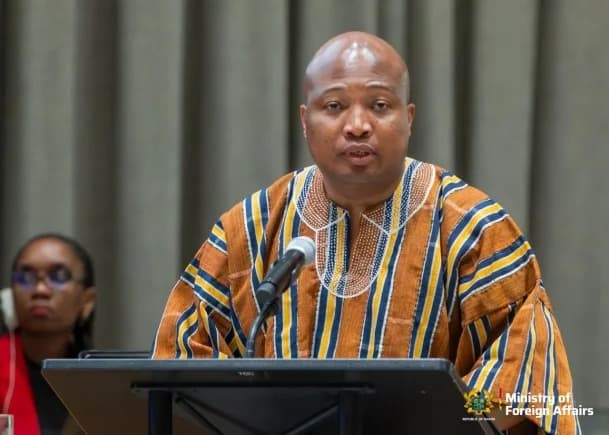
Foreign Affairs Minister Samuel Okudzeto Ablakwa has announced that Ghana intends to apply for partner-country status within the BRICS economic bloc, rather than seeking full membership. Speaking on TV3's "Key Points" on October 10, 2026, the Minister explained that this strategic decision is designed to broaden the nation's economic and diplomatic horizons while strictly adhering to its long-standing policy of non-alignment. By pursuing the partner-country category, Ghana aims to formalize cooperation with the expanded 11-member bloc—which represents a significant portion of global GDP—without jeopardizing its established relationships with Western allies.
The Minister emphasized that the move aligns with national interests as enshrined in the 1992 Constitution and draws inspiration from the strategic diversification strategies first championed by President Kwame Nkrumah. With Ghana’s GDP projected by the World Bank to reach $114.2 billion and a growth rate of 6.0%, the government views the Global South as a vital arena for shifting from a low-value commodity exporter to a participant in high-value sectors such as technology and infrastructure. Ablakwa noted that Ghana already maintains robust trade ties with core BRICS members, including China, India, and South Africa, making a formal partnership a logical progression for the country's development agenda.
Addressing opposition from the New Patriotic Party (NPP), Ablakwa described the Minority’s criticism as "disingenuous." He revealed that a technical committee report and cabinet memos from the previous Akufo-Addo administration had also evaluated the benefits of joining the bloc. According to the Minister, the previous government’s own assessments suggested that BRICS membership could enhance Ghana’s international influence and improve cooperation with Western nations. He urged for a sincere national discussion based on facts rather than political rivalry, asserting that the current path is a continuation of a legitimate national interest inquiry.
However, the announcement has prompted calls for a comprehensive diplomatic and economic roadmap. Economist Prof. Godfred Bokpin warned that while diversification is beneficial, the government must proactively manage potential risks to traditional alliances, particularly with the United States. Similarly, legal practitioner Martin Kpebu and NPP Bono East Regional Secretary David Boakye have both suggested that partner status—rather than full membership—is a more pragmatic approach. They argued that such an arrangement allows Ghana to reap economic benefits and enhance its bargaining power without the more stringent requirements and potential ideological baggage associated with full admission.
As Ghana moves forward with its application, it faces the challenge of persuading the current BRICS leadership that it brings unique value to the table. Unlike Nigeria, which already holds a partner designation, Ghana will need to leverage its political stability and cultural influence to secure the necessary consensus from existing members. The final outcome of this bid will likely serve as a test of Ghana's ability to maintain its "friend to all, enemy to none" foreign policy in an increasingly multipolar global environment.
Related topic
NPP (New Patriotic Party): Latest News →
