••
Yaw Amo Wiafe urges Allied Health graduates to prioritize lifelong learning
•2 min read•1 source
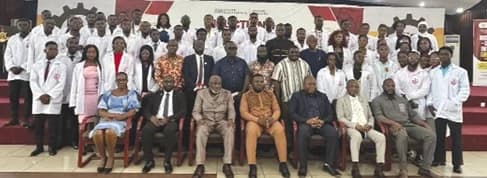
Professor Yaw Amo Wiafe, the Dean of the Faculty of Allied Health Sciences at the Kwame Nkrumah University of Science and Technology (KNUST), has called on newly inducted Allied Health Professionals to make lifelong learning their top priority. Speaking at an induction ceremony for recent graduates, the Dean underscored that the degree earned at the university is merely a foundation that must be reinforced through continuous professional development. He emphasized that building upon this foundational knowledge is essential to ensuring patient safety and maintaining high standards of care within the medical profession.
Prof. Wiafe highlighted that the healthcare field is currently characterized by rapid advancements in both medical knowledge and technology. He cautioned the new graduates against complacency, noting that relying solely on their undergraduate training could lead to obsolescence in a fast-evolving landscape. To stay relevant and provide the best possible outcomes for patients, he urged the new practitioners to focus on continuous skill enhancement and to proactively adapt to emerging medical technologies as they begin their professional journeys.
The ceremony also featured insights from the Ashanti Regional Minister, Dr. Frank Amoakohene, who echoed the Dean’s sentiments regarding professional growth. Dr. Amoakohene advised the graduates to actively seek ongoing educational opportunities beyond their initial degrees. He reminded the inductees that their commitment to learning directly impacts the effectiveness of medical interventions and the overall quality of the Ghanaian healthcare system, urging them to remain curious and dedicated throughout their careers.
In addition to the call for academic and technical growth, speakers at the event emphasized the necessity of maintaining a patient-centered approach and rigorous safety standards. By integrating continuous learning with empathy and professionalism, the newly inducted health workers are expected to uphold the integrity of the Allied Health profession. The induction serves as a formal transition into a career where ethical practice and constant adaptation are vital for meeting the complex demands of modern healthcare.