••
World Vision Ghana launches project to restore 100 hectares of land in Bongo
•2 min read•1 source
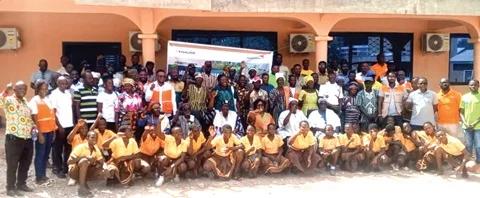
World Vision Ghana has officially launched the third phase of the Farmer-Managed Natural Regeneration (FMNR) PLUS project in the Bongo District of the Upper East Region. This two-year initiative is designed to restore 100 hectares of degraded land and enhance the food security of approximately 7,500 residents. Funded by the Knauer Family and Company of Germany, the project builds upon successful environmental interventions previously implemented in 30 communities within the Binduri District.
The project targets 10 communities in Bongo, where it will introduce climate-smart agricultural practices and promote natural regeneration techniques to combat soil infertility. Beyond environmental restoration, the initiative aims to empower local populations through the formation of savings groups and the distribution of energy-efficient stoves. These measures are intended to reduce the reliance on traditional firewood, thereby curbing further deforestation while providing economic buffers for vulnerable households.
Joshua Baidoo, the acting National Director of World Vision Ghana, highlighted that the project is a direct response to the increasing challenges of erratic rainfall and declining agricultural productivity in the region. He emphasized that the initiative will prioritize the participation of vulnerable groups in decision-making processes to ensure that climate resilience is inclusive. The project estimates it will directly benefit 2,500 people, with an additional 5,000 indirect beneficiaries throughout its duration.
The Bongo Local Assembly and the Traditional Council have pledged their full support for the project, acknowledging the urgency of adopting sustainable land management practices. As climate change continues to impact local livelihoods, the FMNR PLUS project represents a strategic effort to bridge the gap between environmental conservation and food security. The successful implementation in Bongo is expected to serve as a model for further community-led environmental initiatives in the northern savannah ecological zone.
