••
World records 1,425 days without cooler-than-normal weather
•2 min read•1 source
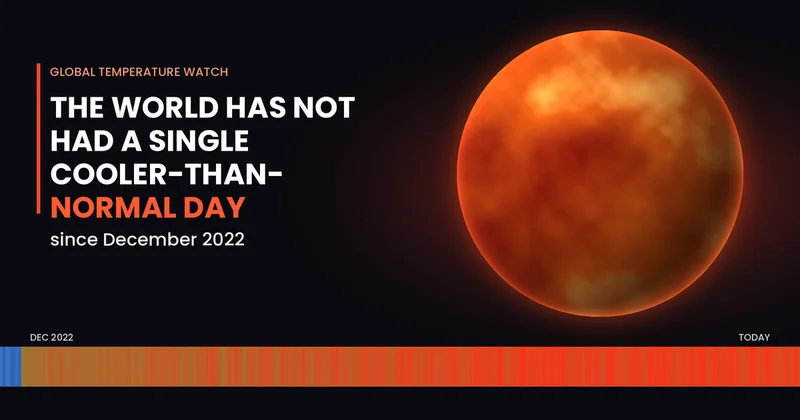
The global climate has reached a significant milestone, recording 1,425 consecutive days without a single "cooler-than-normal" day. According to research by JoyNews, this unprecedented streak began following December 1, 2022, the last time global temperatures dipped even slightly below the historical average. This period represents the longest sustained stretch of warmer-than-average temperatures in more than 80 years, providing a stark illustration of the accelerating pace of global warming and its persistent impact on the planet's weather systems.
Data from the European Centre for Medium-Range Weather Forecasts (ECMWF) shows that this current streak is significantly longer than the previous record of 959 days, which was set between June 2015 and February 2018. For this analysis, researchers used the 1991-2020 average as the baseline for "normal" temperatures. The fact that the world has not met or fallen below this baseline for nearly four years highlights a fundamental shift in global climate stability, suggesting that the fluctuations once considered typical are being replaced by a consistent upward trend in heat.
In Ghana, the implications of this global trend are already being felt and are forecasted to intensify. The Ghana Meteorological Agency (GMet) has been tracking rising local temperatures that mirror the international findings. This sustained warmth is manifesting across the country through more frequent heatwaves and increasingly intense rainfall events. These changes pose substantial risks to the nation's agriculture sector and public health infrastructure, as traditional seasonal patterns become less predictable and the environment adapts to a higher baseline of thermal energy.
This record-breaking 1,425-day period underscores the severity of the ongoing climate crisis and the necessity for robust mitigation and adaptation strategies. As temperatures continue to stay above historical norms, the likelihood of extreme weather events increases. For both the international community and Ghanaian authorities, the data serves as a critical call to action to address environmental instability and prepare for the long-term consequences of a warming world that no longer experiences the cooling cycles of the past.