••
WFP and KOICA Empower Five Ghanaian Agricultural Colleges with $500,000 Agritech Donation
•2 min read•1 source
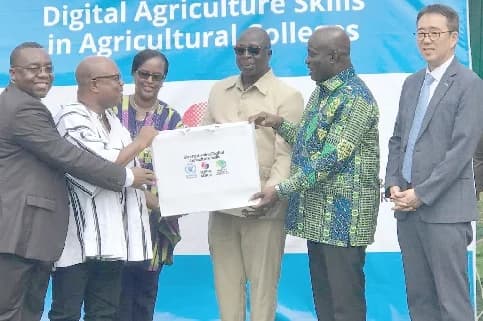
The World Food Programme (WFP), in partnership with the Korea International Cooperation Agency (KOICA), has officially handed over agritech equipment valued at $500,000 to five prominent Colleges of Agriculture across Ghana. This significant investment is designed to revolutionize agricultural education by integrating modern technology into the curriculum of Damongo, Ohawu, Ejura, Kwadaso, and Wenchi Colleges of Agriculture. The initiative, themed ‑Strengthening agricultural education for a digital future,‑ seeks to bridge the gap between traditional farming methods and the data-driven demands of modern global agriculture.
The donated suite of equipment includes advanced tools such as drones, moisture meters, soil testers, and greenhouse environmental control kits. Additionally, the colleges received Internet of Things (IoT) sensor kits and automated weather stations. These technologies are intended to provide students and agricultural professionals with hands-on experience in precision farming, allowing for better decision-making and increased productivity. By equipping these institutions with high-tech gear, the partnership aims to transform the learning environment from purely theoretical to a practical, technology-led experience.
Speaking at the handover ceremony, the Minister for Food and Agriculture, Eric Opoku, underscored the importance of this initiative as a vital investment in the nation's future. He emphasized that preparing graduates with digital literacy is essential for modernizing Ghana’s agricultural sector and ensuring it remains competitive. WFP Country Director Aurore Rusiga echoed these sentiments, highlighting the transformative potential of digital tools in helping farmers overcome contemporary challenges. KOICA representative Dong Wan Woo further noted that the collaboration focuses on the economic empowerment of Ghanaian youth through digitalization, which is a critical pillar for long-term food security.
The impact of the donation was welcomed by educators on the ground, with Albert Appiah Amoakoh, the Principal of Kwadaso College, commending the initiative for its role in linking classroom theories with real-world application. As the agricultural sector continues to evolve, these five colleges are now positioned to serve as hubs for digital innovation, producing a new generation of "agri-preneurs" capable of leveraging technology to boost yields and enhance the resilience of Ghana’s food systems. This partnership marks a strategic step toward a more sustainable and technologically advanced agricultural landscape for the country.