••
WFP and KOICA Empower Five Ghanaian Agricultural Colleges with $500,000 Agritech Investment
•2 min read•1 source
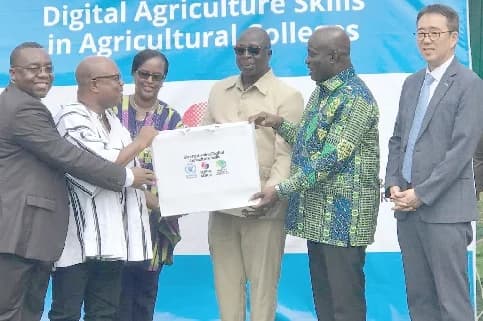
Five Colleges of Agriculture across Ghana have received a significant technological boost through a $500,000 donation of agritech equipment, facilitated by the World Food Programme (WFP) with support from the Korea International Cooperation Agency (KOICA). The initiative, themed “Strengthening agricultural education for a digital future,” targets institutions in Damongo, Ohawu, Ejura, Kwadaso, and Wenchi. This investment is designed to bridge the gap between traditional farming and modern, data-driven agricultural practices, ensuring that the next generation of Ghanaian farmers is equipped for a digitalized global market.
The donated suite of technology includes high-tech tools such as drones, moisture meters, soil testers, and greenhouse environmental control kits. These instruments are expected to transform how students interact with the land, moving from theoretical knowledge to precision farming. During the handover ceremony, the Minister for Food and Agriculture, Eric Opoku, described the initiative as a vital investment in the nation's future. He emphasized that the introduction of these tools would prepare graduates for a modern landscape where agricultural success is increasingly defined by accurate data and technological proficiency.
WFP Country Director Aurore Rusiga noted that digital technologies hold transformative potential for smallholder farmers, while KOICA’s Dong Wan Woo highlighted the focus on economic empowerment. According to Woo, the partnership aims to leverage digitalization to improve food security and provide sustainable livelihoods for the youth. Representing the beneficiary institutions, Albert Appiah Amoakoh, Principal of Kwadaso College, praised the initiative for its practical utility. He pointed out that the equipment would allow students to directly apply classroom theories to field-based scenarios, enhancing the overall quality of agricultural vocational training.
This collaboration between the WFP, KOICA, and the Ministry of Food and Agriculture underscores a broader strategic shift toward tech-enabled food systems in Ghana. By modernizing the curricula and resources of the country’s leading agricultural colleges, the program seeks to make the sector more attractive to young people and more resilient to environmental challenges. As these students transition into the workforce, the integration of agritech is expected to drive higher yields, better resource management, and a more robust national food security framework.