••
New York State Secretary Walter T. Mosley Strengthens Diaspora Ties at W.E.B. Du Bois Memorial Centre in Accra
•2 min read•1 source
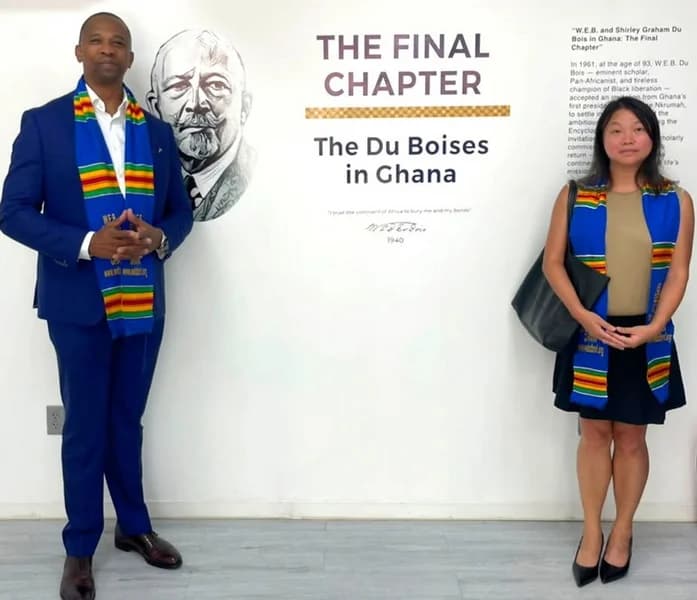
New York State Secretary Walter T. Mosley recently completed a significant visit to the W.E.B. Du Bois Memorial Centre for Pan-African Culture in Cantonments, Accra, emphasizing the importance of connecting diaspora leaders with Ghana’s cultural heritage. The visit served as a homecoming of sorts, focusing on the preservation of Dr. W.E.B. Du Bois’s monumental legacy as a scholar and civil rights pioneer. As the Centre prepares for a major transformation, Mosley’s presence highlighted the strategic importance of international collaboration and the role of the New York philanthropic network in safeguarding Pan-African history.
During his private tour, Secretary Mosley visited the Centre’s photograph exhibit and its document preservation lab, facilities dedicated to protecting the primary records of Du Bois's work and life. Despite the site being under extensive renovation, which has restricted access to the main bungalow, the Secretary paid his respects by laying a wreath at the tomb where Dr. Du Bois is interred alongside his wife, Shirley Graham Du Bois. Following the tour, Mosley met with leaders of the W.E.B. Du Bois Museum Foundation to discuss practical support for redeveloping the memorial into a comprehensive, world-class museum complex.
The site holds immense historical weight, serving as the final residence of the American-born sociologist. Dr. Du Bois moved to Ghana in 1961 at the invitation of the nation’s first president, Dr. Kwame Nkrumah, to lead the ambitious Encyclopedia Africana project. Having become a Ghanaian citizen, Du Bois spent his final years in the Cantonments residence until his death in 1963. The current initiative to enhance the Centre’s facilities aims to ensure his transition from an American academic to a Pan-African statesman continues to inspire future generations.
Moving forward, the W.E.B. Du Bois Museum Foundation is focused on securing the funding and partnerships necessary to realize the vision of an expanded museum. This redevelopment is seen as a critical step in documenting African history and fostering global academic exchange. While the Centre remains open to visitors during specific hours, officials encourage the public to check the availability of specific exhibits and areas in advance, as the ongoing renovations are expected to continue for the foreseeable future.