••
Sudanese Foreign Minister Condemns U.S. for Blocking Army Chief Gen. Abdel-Fattah Burhan's Visa
•2 min read•2 sources
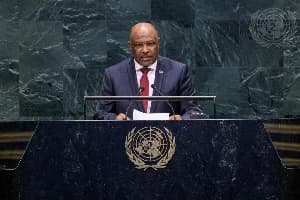
Sudanese Foreign Minister Mohieldin Salim Ahmed Ibrahim has issued a sharp condemnation of the United States government following its decision to deny a travel visa to Sudan’s Army Chief, General Abdel-Fattah Burhan. The move effectively barred the General from participating in the United Nations General Assembly, a key international forum for addressing the ongoing instability and humanitarian challenges facing the North African nation. Ibrahim characterized the visa block as a significant obstacle to Sudan's ability to represent its sovereign interests on the global stage at a critical juncture in its history. During his address, the Foreign Minister emphasized that the absence of General Burhan from the high-level discussions in New York was a direct result of the host country's failure to facilitate his attendance. Ibrahim argued that as the host of the UN headquarters, the United States has a responsibility to ensure that representatives of all member states can participate in the General Assembly without interference. He suggested that such diplomatic barriers only serve to isolate the Sudanese leadership at a time when direct dialogue with the international community is most needed to resolve the nation's internal conflicts. Furthermore, Minister Ibrahim made a pointed appeal to the international community to cease all forms of foreign support that are currently fueling Sudan’s civil war. He stressed that external actors providing resources and assistance to factions within the country are exacerbating the violence and prolonging the suffering of the Sudanese people. By linking the visa denial to the broader issue of foreign interference, Ibrahim positioned the U.S. action as part of a pattern of external pressures that undermine the state's efforts to restore order and stability. The diplomatic fallout from this visa denial highlights the increasingly tense relations between Sudan’s military-led government and Western powers. As Sudan remains mired in a devastating conflict, the Sudanese government maintains that the exclusion of its top leadership from international diplomatic venues hinders the search for a comprehensive peace. The situation underscores the complexities of international diplomacy where host-country policies can directly impact the inclusivity of global governance institutions like the United Nations.
