••
US State Department offers $20m reward for Iran nuclear intelligence
•2 min read•1 source
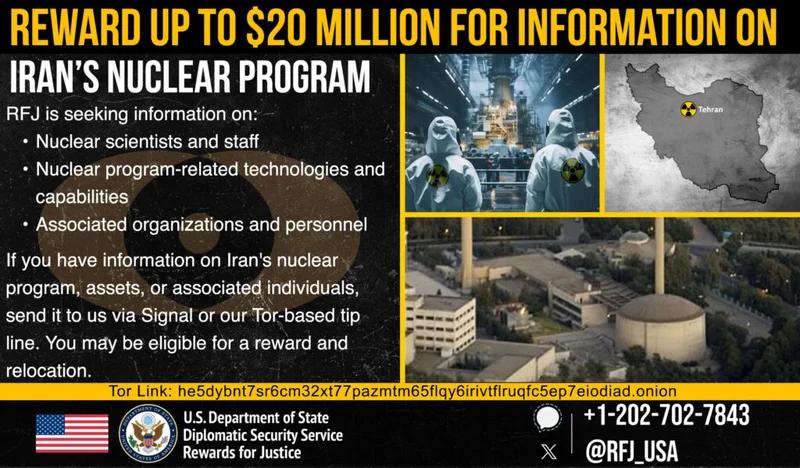
The United States State Department has announced a reward of up to $20 million for information leading to the disruption of Iran’s nuclear program. This initiative, launched through the Rewards for Justice program, specifically targets intelligence regarding nuclear personnel and strategic technologies. The announcement comes as Washington intensifies its efforts to prevent Tehran from acquiring nuclear weapons capability, citing ongoing compliance failures and heightened geopolitical tensions in the region.
The incentive structure is designed to elicit high-level intelligence that could curb Iran's nuclear operations. According to the State Department, the focus is on identifying key individuals involved in the program and uncovering sensitive technologies that facilitate nuclear advancement. This move is part of a broader strategy to increase oversight and transparency around Tehran’s activities, which the U.S. government maintains have repeatedly bypassed international safeguards and oversight mechanisms.
The situation has been further complicated by recent shifts in U.S. domestic politics following midterm elections, which have spurred discussions regarding potential military actions or more stringent enforcement measures. While Iran continues to assert that its nuclear activities are intended solely for peaceful purposes, the U.S. has signaled a readiness to deploy a range of strategies, including naval blockades and the possibility of military strikes, to ensure regional stability. These measures are framed as part of a strategy aimed at deterring further nuclear escalation through both financial and strategic pressure.
Diplomatic negotiations remain on the table, though the current atmosphere is marked by significant friction. The international community is closely watching how this reward program might impact intelligence gathering and whether it will lead to a breakthrough in stalled diplomatic efforts. As military readiness remains a priority for Washington, the effectiveness of this financial incentive in disrupting Tehran's nuclear ambitions remains a focal point of global security monitoring.