••
UPSA, DTI, and CNC Champion Practical Innovation and Entrepreneurship in Ghana's Education Sector
•2 min read•3 sources
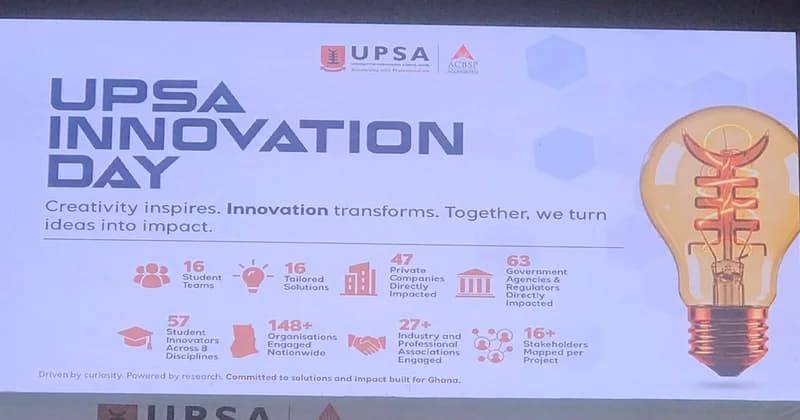
Ghanaian educational institutions are leading a decisive shift toward practical innovation and entrepreneurship, moving beyond traditional theoretical frameworks to address real-world socio-economic challenges. The University of Professional Studies, Accra (UPSA), the Design and Technology Institute (DTI), and the Centre for National Culture (CNC) have recently held major events designed to bridge the gap between the classroom and the industry. These initiatives emphasize the necessity of equipping students with both technical expertise and the business acumen required to thrive in a competitive global market. At the University of Professional Studies, the institution’s commitment to fostering a culture of innovation was showcased during its Innovation Day. Vice Chancellor Professor John K. M. Mawutor challenged students to apply academic knowledge to solve societal problems, leading to a business pitch competition where groups presented diverse solutions. The top prize went to SMART FIRM, followed by a social media task reporting system and an AI-driven search assistant. The event also featured the introduction of UNIVA360, a student-collaborated accounting software that exemplifies the university's drive toward digital solutions. Simultaneously, the Design and Technology Institute hosted its 2026 Students Projects Exhibition in Accra under the theme 'Creative Minds, Sustainable Solutions.' Final-year students displayed prototypes focusing on precision fabrication and sustainable technologies, including innovations in agricultural processing, recycling, and water sanitation. Supported by partners like the Mastercard Foundation, the exhibition highlighted the critical role of Technical and Vocational Education and Training (TVET) in industrializing the region. Zakaria Abdul-Rahman of the Commission for TVET (CTVET) noted that aligning curricula with industry demands is essential for ensuring graduate employability. Furthering this mission of self-reliance, the CNC organized an Entrepreneurship and Financial Literacy Seminar for 67 trainees in various vocational fields. Resource persons from the Consolidated Bank Ghana (CBG) and CEDECOM provided essential training on budgeting, financial discipline, and business sustainability. CNC Acting Regional Director Ebenezer Nti urged trainees to view their skills in areas such as photography and hair braiding not just as crafts, but as viable commercial ventures. These collective efforts represent a broader national strategy to reduce youth unemployment by nurturing a generation of job creators rather than job seekers, ensuring that Ghana's educational output meets the dynamic needs of the modern economy.
