••
United Nations commends Kofi Annan's inclusion on new Heritage banknotes
•2 min read•1 source
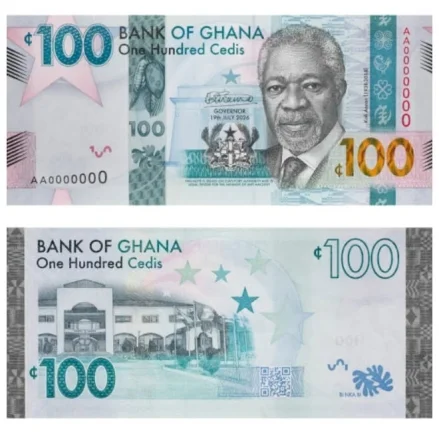
The United Nations in Ghana has formally commended the Bank of Ghana for including the late former Secretary-General Kofi Annan in the newly launched Heritage Series banknotes. Released on November 12, 2026, the new currency series seeks to honor the nation’s most distinguished figures and their historical contributions. The UN's recognition highlights the significant impact Annan had on both the domestic and international stages, framing the inclusion as a fitting tribute to a man who dedicated his life to global harmony and human rights.
Kofi Annan served as the seventh Secretary-General of the United Nations from January 1997 to December 2006. As the first person from sub-Saharan Africa to lead the organization, his tenure was marked by a commitment to the Millennium Development Goals and the fight against HIV/AIDS. Zia Choudhury, representing the UN in Ghana, emphasized that the Bank of Ghana’s decision celebrates a legacy of peace and sustainable development that remains relevant today. Annan, a Nobel Peace Prize laureate, is remembered for his reformist approach to the UN and his ability to mediate complex international conflicts with integrity and poise.
The inclusion of Annan on the banknotes is part of the central bank's broader initiative to use national symbols to celebrate Ghana's rich heritage and its contributors to world progress. By placing his image on the currency, the Bank of Ghana ensures that his contributions to global solidarity are integrated into the daily lives of all Ghanaians. The UN noted that this recognition is expected to serve as a constant inspiration for citizens, particularly the youth, to strive for leadership roles that prioritize humanitarian values and diplomatic excellence.
As the new banknotes enter circulation, the UN in Ghana reiterated its hope that the legacy of Kofi Annan will continue to guide the nation’s path toward development and democratic stability. The statement concluded that honoring Annan in this manner reinforces the values of global citizenship and serves as a testament to Ghana's influential role in international diplomacy. This move by the central bank is seen as a significant step in preserving the historical memory of one of the African continent's most esteemed sons.
