••
UMaT delegation visits Tema Oil Refinery to bridge industry-academia gap
•2 min read•1 source
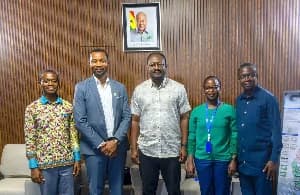
A high-level delegation from the School of Petroleum Studies at the University of Mines and Technology (UMaT) visited the Tema Oil Refinery (TOR) to establish a strategic partnership between the academic institution and the energy industry. The meeting, held with the Managing Director of TOR, Edmond Kombat, focused on creating a framework to align petroleum studies with the practical realities of refinery operations. This initiative aims to ensure that students and faculty remain at the forefront of industrial advancements while providing the refinery with academic support.
The UMaT delegation featured prominent academic figures, including the Dean of the School of Petroleum Studies, Professor Richard Amorin. He was joined by Associate Professor Harrison Osei, Associate Professor Ohenewaa K. Dankwa, and Dr. Ato Fanyin-Martin. The presence of these senior faculty members underscores the university's commitment to integrating professional development and industrial exposure into its curriculum, ensuring that graduates are better equipped for the Ghanaian energy market.
Discussions during the visit centered on bridging the gap between theoretical education and technical application. By fostering closer ties with TOR, the university seeks to enhance its research capabilities and provide students with vital hands-on experience within a functioning refinery environment. Managing Director Edmond Kombat expressed openness to the collaboration, recognizing the value of academic insights in optimizing industrial processes and addressing the evolving challenges of the petroleum sector.
This partnership represents a critical step in strengthening the synergy between Ghana’s educational institutions and its industrial base. As the energy sector continues to grow under the current administration, such collaborations are expected to play a pivotal role in developing a highly skilled workforce. Both TOR and UMaT intend to continue these dialogues to formalize programs for internships, joint research, and technical exchange that will benefit both the refinery and the next generation of petroleum professionals.
