••
University of Cape Coast Secures $500m Infrastructure Deal and Honors Veteran Journalist Kwesi Pratt Jnr
•2 min read•4 sources
The University of Cape Coast (UCC) has reached a significant developmental milestone by signing a $500 million Memorandum of Understanding (MoU) with GSC Property Investment Limited to address its student accommodation deficit. This ambitious public-private partnership aims to construct 28 dormitory blocks with the capacity to house 28,000 students, alongside various commercial facilities. Under the build-operate-transfer (BOT) model, the Chinese firm will finance and manage the infrastructure for 30 years before transferring ownership to the university. Construction for the first phase is scheduled to begin in January 2027 following the completion of necessary regulatory approvals.
Alongside this infrastructure boost, the university held a special congregation to confer an honorary Doctor of Letters (D.Litt.) on veteran journalist and Pan-Africanist Kwesi Pratt Jnr. The Chancellor of UCC, Sir Sam Jonah, praised Pratt’s steadfast commitment to independent journalism and his pivotal role in enriching Ghana's public discourse. In his acceptance speech, Pratt reflected on his lifelong dedication to African liberation and the enduring influence of Dr. Kwame Nkrumah's ideals on his career. Vice-Chancellor Prof. Denis Aheto noted that the award recognizes Pratt's decades of service and his impact on national conversations regarding democracy and freedom.
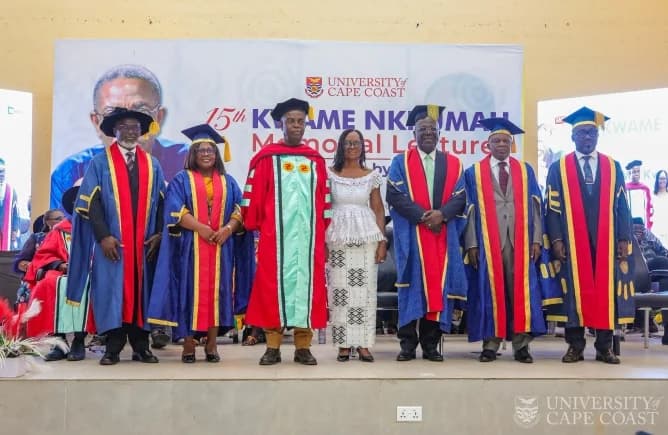
The ceremonies also served as a platform for critical national reflection. Speaking at the 15th Kwame Nkrumah Memorial Lectures, Sir Sam Jonah challenged the nation to move beyond decades of political debate over Nkrumah’s legacy and focus instead on practical nation-building. He emphasized that the focus should be on the physical and institutional developments Nkrumah championed, rather than partisan arguments. This call for progress aligns with the university’s current expansion efforts, which include the growth of its e-Campus to offer a wider range of accredited advanced programs.
These combined developments highlight UCC's dual focus on academic recognition and physical modernization. By securing one of the largest private investments in Ghanaian campus housing and simultaneously honoring voices of democratic dissent, the university is positioning itself as a leader in both institutional growth and intellectual leadership. As the project progresses toward its 2027 start date, the university administration expects the new facilities to significantly improve the student experience and set a new standard for university infrastructure across the West African sub-region.


