••
Tuku Nkosiyaphantsi discovers daughter's murder via Facebook
•2 min read•2 sources
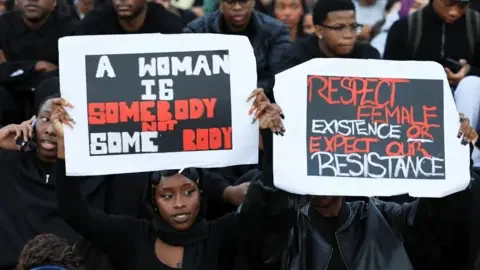
Tuku Nkosiyaphantsi, a South African father, discovered the tragic death of his 27-year-old daughter, Okuhle, after encountering a social media post describing her mutilated body. Okuhle, a civil engineering student and mother of two, was found near a river in Kokstad following a period where she had been unreachable. The discovery has become a focal point for the growing outcry against the epidemic of gender-based violence (GBV) in the country, where families are increasingly left to find news of their loved ones through public digital spaces.
The murder occurred during a particularly violent period in South Africa, where official records show that 581 women were murdered between July and September alone. Okuhle’s father noted that while it was not entirely unusual for his daughter to go silent for a few days, the lack of communication in August eventually turned into a nightmare when he saw the details of a local killing shared on Facebook. The brutality of the crime and the manner of its discovery have highlighted the deep-seated trauma faced by families in high-crime areas.
In Kokstad, the incident has sparked significant local anger over what residents describe as a lack of adequate protection from the South African police. Although President Cyril Ramaphosa has previously promised enhanced police measures and the implementation of community safety audits, many in the town feel these assurances have not translated into improved security. Feeling ignored by the authorities, members of the local community have begun organizing their own street patrols to deter further violence against women and children.
This case serves as a grim illustration of the ongoing femicide crisis in South Africa, where women are forced to adopt extreme preventative measures in their daily lives. The disconnect between government policy and the lived experience of citizens in Kokstad underscores the urgent need for more effective intervention. As the Nkosiyaphantsi family mourns, the community continues to demand justice and a fundamental shift in how the state addresses the systemic violence targeting women.