••
Donald Trump joins Xi and Putin for nuclear arms summit in Shenzhen
•2 min read•2 sources
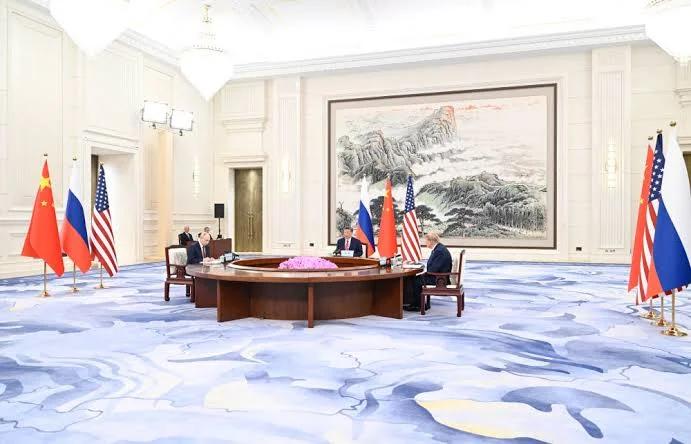
United States President Donald Trump, Russian President Vladimir Putin, and Chinese President Xi Jinping have concluded a landmark trilateral summit in Shenzhen, China. Held on the sidelines of the Asia-Pacific Economic Cooperation (APEC) gathering, the meeting focused on global energy security and the urgent need for nuclear arms control. The summit marks a significant diplomatic moment as the leaders addressed the looming expiration of the New START treaty and sought to establish a framework for stability in a multipolar world.
The three leaders released a joint declaration emphasizing their commitment to reducing nuclear risks and maintaining global stability. However, the document was notable for its lack of specific policy measures or concrete action items. Beyond nuclear security, the talks touched on global energy markets and included a collective warning against the jurisdiction of the International Criminal Court (ICC). President Xi Jinping used the platform to position China as a central diplomatic mediator, while President Trump referred to his counterparts as "friends" during the discussions.
Despite the cordial tone in Shenzhen, the summit has sparked concerns among traditional Western allies. Analysts noted that the realignment could potentially marginalize Ukrainian interests and strain relations with NATO, as the three leaders appeared to bypass traditional diplomatic channels. European leaders have already begun seeking ways to counteract the influence of the meeting, which observers view as a pivot in global foreign policy dynamics. While the summit opened doors for high-level dialogue, the absence of binding agreements leaves the future of international cooperation on nuclear proliferation uncertain.