Anansi News
HomeBriefsAsk GhanaTopicsTools
•
•

Stay Informed

Get AI-curated news briefs from Ghana delivered to your inbox every morning. Free forever, no spam.

Explore

  • Home
  • Briefs
  • About

Categories

  • Politics
  • Business
  • Sports
  • Entertainment
  • Africa

Features

  • Analysis
  • Cedi Rates
  • Dollar to Cedi
  • Ghana Gold Price
  • BoG Policy Rate

Topics

  • Armed Forces Recruitment
  • WAEC Results & News
  • Nana Ama McBrown
  • NDC News
  • All Topics

Legal

  • Privacy Policy
  • Terms of Service
Anansi News© 2026. All rights reserved.
Made withfor Ghana
health

Tema East Sub-Metro Demolishes Unhygienic Fish Processing Structures to Bolster Food Safety

4th August•2 min read•1 source
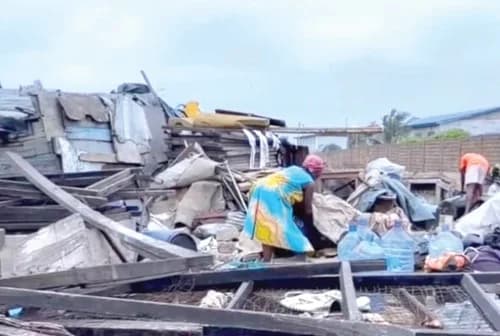
Some of the affected persons sifting through the rubble to salvage what was left of their belongings
  1. Home
  2. /Health
  3. /Tema East Sub-Metro Demolishes Unhygienic Fish Processing Structures to Bolster Food Safety

The Tema East Sub-Metro Council has carried out a significant demolition of makeshift structures at the Tema Newtown fish processing site as part of a broader initiative to improve sanitation and food safety standards. The operation, led by Sub-Metro Chairman Agabby Sumaila Adjetey, was conducted in collaboration with the Tema Metropolitan Assembly (TMA) and the Food and Drugs Authority (FDA). The presence of the Ghana Police Service ensured security during the exercise, which targeted facilities that were deemed unfit for food production due to severe hygiene violations.

At the core of the council's decision were alarming reports of fish being processed directly on the ground in unsanitary conditions. Chairman Adjetey emphasized that these practices posed a significant public health risk to consumers across the region. By removing the dilapidated and unregulated structures, the authorities aim to enforce stricter compliance with food handling protocols. The FDA’s involvement underscores the regulatory necessity of the move, ensuring that the processing of one of the nation's primary protein sources meets the required health benchmarks.

While the authorities maintain that discussions were held with the fish processors prior to the demolition, the exercise met with mixed reactions from the local community. Some processors expressed disappointment and frustration, claiming they were not given sufficient notice to relocate their equipment or salvage their materials. Conversely, other stakeholders in the area acknowledged the poor sanitary conditions and expressed a willingness to collaborate with the assembly to establish more hygienic and professional working practices that benefit the entire value chain.

Looking forward, the Tema East Sub-Metro Council plans to transition the site into a modern, standardized fish-processing center. Post-demolition efforts will focus on providing adequate facilities that support better fish handling, preservation, and waste management. This redevelopment is expected to not only improve the health outcomes for the general public but also enhance the livelihoods of the processors by providing them with a cleaner, more sustainable environment that meets international food safety standards.

Our Take

From the Team

Coming Soon

Our team will add key insights, trends, and actionable takeaways to help you stay informed faster.

This story touches markets covered on Anansi Intelligence ↗.

More from health

Continue exploring similar stories

Local vaccine production takes shape - PharmaVax awards €2 million R&D grants
health|Yesterday

PharmaVax Ghana Awards ‐2 Million in R&D Grants to Bolster Local Vaccine and Pharmaceutical Manufacturing

Ghana’s drive toward pharmaceutical self-reliance has received a significant boost as the PharmaVax Ghana programme awarded ‐2 million in research and development (R&D) grants to eight selected projects. This initiative, co-hosted by the National Vaccine Institute and the Deutsche Gesellschaft für Internationale Zusammenarbeit (GIZ), aims to foster strategic partnerships between academic institutions and private pharmaceutical firms. By funding these specialized projects, the programme seeks to transition scientific research into tangible medical products, specifically focusing on local manufacturing to enhance national health security and reduce the country's reliance on imported medicines. The grants cover a diverse range of innovative health solutions, including the development of child-friendly malaria treatments and the application of artificial intelligence (AI) for antibody discovery. These projects represent a collaborative effort among esteemed Ghanaian universities, research centers, and local pharmaceutical companies. Demonstrating a shared commitment to the initiative, Ghanaian partners are contributing an additional ‐425,000 in counterpart funding. This financial synergy highlights a growing confidence in the local industry’s ability to move beyond distribution toward high-level research and actual production. The PharmaVax programme serves as a critical bridge between the theoretical work conducted in laboratories and the industrial scale-up required for public health impact. During the award ceremony, health officials emphasized that local pharmaceutical production is a necessity for safeguarding the population against future health crises. By integrating the technical expertise of academia with the manufacturing capabilities of the private sector, the initiative aims to create a sustainable ecosystem for medical innovation within Ghana, ensuring that scientific breakthroughs lead to accessible treatments for the populace. As Ghana continues to position itself as a regional hub for vaccine production under the leadership of President John Mahama’s administration, these R&D investments are expected to yield long-term dividends in both public health and economic growth. The successful implementation of these eight projects is seen as a foundational step toward a more resilient healthcare infrastructure. The collaboration between the National Vaccine Institute and international partners like GIZ underscores the global recognition of Ghana’s potential to lead in the West African pharmaceutical landscape.

2026 China-West Africa Medical and Health Industry Expo Opens in Accra to Bolster AI Integration and Local Manufacturing
health|Yesterday

2026 China-West Africa Medical and Health Industry Expo Opens in Accra to Bolster AI Integration and Local Manufacturing

The 2026 China-West Africa Medical and Health Industry Expo has officially opened at the Ghana International Mall in Spintex, marking a significant milestone in regional healthcare collaboration. Running from August 19 to 21, the event is held in conjunction with the AI Deployment and Project Cooperation Summit. Organized by the Health Community of West Africa Association (HCOWAA), the expo serves as a strategic platform to bridge the gap between Chinese medical innovations and West African healthcare systems, with a primary focus on technology transfer and the modernization of medical services across the sub-region. This year's gathering is expected to draw more than 5,000 medical practitioners and stakeholders from 16 West African nations and beyond. With over 300 exhibitors showcasing cutting-edge solutions, the expo provides a critical forum for medical professionals to explore new technologies and equipment. The inclusion of the AI Deployment Summit highlights a strategic push to integrate artificial intelligence into diagnostic and treatment protocols, ensuring that West African health systems remain competitive and efficient in an increasingly digital global healthcare landscape. During the opening ceremony, Deputy Minister of Health Professor Grace Ayensu-Danquah emphasized the importance of fostering deep partnerships between Chinese innovators and local health providers. Officials and industry leaders at the event noted that collaboration should extend beyond the procurement of medical equipment to include robust investment in local manufacturing. By establishing production hubs within West Africa, the region aims to reduce its reliance on imports and ensure that high-quality medical supplies and pharmaceutical products remain affordable and accessible to the general population. Beyond technology and product displays, the expo is facilitating high-level discussions on regulatory standards and investment frameworks. These dialogues are essential for creating a harmonized environment where medical breakthroughs can be safely and effectively deployed across borders. As the event progresses, the anticipated outcomes include new project agreements and a renewed commitment to improving regional health outcomes through shared expertise and sustainable industrial growth in the medical sector.

Obuobia Opoku-Darko Reflects on Financial Hardships and Personal Resilience Following 2012 Election Defeat
health|Yesterday

Obuobia Opoku-Darko Reflects on Financial Hardships and Personal Resilience Following 2012 Election Defeat

Adjoa Obuobia Opoku-Darko, the Administrator of the Ghana Medical Trust Fund, has offered a rare and vulnerable glimpse into her personal life, recounting the severe financial difficulties she faced after losing the 2012 parliamentary election for the Weija-Gbawe constituency. Speaking at a thanksgiving service held in honor of her 49th birthday, she shared how her life underwent a dramatic transformation from a position of significant political influence to one of profound struggle and isolation. This testimony highlights the often-unseen personal consequences that follow high-stakes political participation. During her emotional address, Opoku-Darko revealed that the period following her electoral defeat was marked by a stark absence of the support systems she had once relied upon. She highlighted the depth of her financial crisis by noting that there were moments when she and her family could not even afford to purchase prepaid electricity credit for their home. This revelation underscores the volatile nature of political careers and the significant personal toll a loss can take on candidates who often exhaust their personal and financial resources during intensive national campaigns. Beyond the material strain, the Ghana Medical Trust Fund Administrator emphasized the importance of mental and emotional health for those in leadership roles. She cautioned against the 'strong person' stereotype, noting that individuals perceived as dependable often neglect their own needs while supporting others. Opoku-Darko encouraged her audience to recognize their vulnerabilities and seek what she termed an 'emotional refill,' arguing that true resilience requires acknowledging when one is struggling rather than simply maintaining a facade of strength for the public eye. Her testimony has resonated as both a cautionary and inspiring tale of perseverance within the Ghanaian public sphere. By sharing these experiences, Opoku-Darko aims to prompt a broader reflection on the nature of relationships and the necessity of robust support systems during times of professional hardship. As she continues her work leading the Ghana Medical Trust Fund under the administration of President John Mahama, her story serves as a reminder of the human experiences that shape public officials and the vital importance of empathy and emotional health within the political landscape.

West Gonja Municipal Assembly Demolishes Dangerous Public Toilet in Hangaline After Media Report
health|Yesterday

West Gonja Municipal Assembly Demolishes Dangerous Public Toilet in Hangaline After Media Report

Authorities in the West Gonja Municipality have demolished a dilapidated and hazardous public toilet facility in the Hangaline suburb of Damongo. The action followed an investigative report by Channel One News that highlighted the severe public health risks posed by the crumbling structure and the accumulation of refuse in the surrounding area. While the demolition marks a significant step toward addressing the community's sanitation crisis, it has also brought into focus the functional gaps in the local infrastructure, as residents are currently left without a viable public alternative. Despite the removal of the old structure, a newly constructed public toilet facility in the community remains under lock and key. Local authorities have cited a lack of essential utilities, specifically reliable water and electricity, as the primary reason for the delay in opening the project. The Municipal Environmental Health Officer stated that the closure is a temporary measure pending the completion of major works required to make the facility fully operational. However, the continued delay has raised frustrations among residents who are eager to move away from the unhygienic conditions that characterized the previous site. The situation has sparked a broader conversation about sanitation management in Damongo. While residents urge the assembly to fast-track the utility connections to the new facility, health officials are using the transition period to advocate for a shift in community practices. The Municipal Environmental Health Office is encouraging households to construct their own private toilets and adopt more rigorous waste disposal habits. This strategy aims to reduce the community’s total reliance on public facilities, which are often prone to over-usage and maintenance failures. As the West Gonja Municipal Assembly works to resolve the technical hurdles at the new Hangaline site, the demolition of the old structure serves as a reminder of the impact of media oversight in driving local government accountability. The long-term success of sanitation efforts in the area will depend on a combination of functional public infrastructure and the community’s commitment to sustainable hygiene practices. For now, the people of Hangaline remain expectant that the promised upgrades to the new facility will be completed swiftly to provide the dignity and health protections they require.

All
africa
business
education
entertainment
health
news
politics
sports
technology