••
Sudan Lifts Two-Year Curfew in Khartoum as Military Consolidates Control Against RSF
•2 min read•1 source
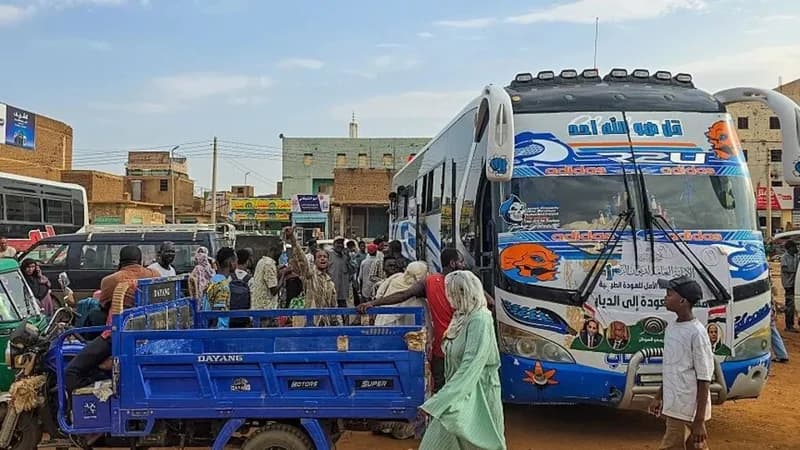
Sudan's military-led government has officially lifted the two-year curfew and state of emergency in the capital city of Khartoum, marking a significant shift as the national army consolidates its grip on the region. This decision follows the military's successful campaign to reclaim key sectors of the capital that were previously occupied by the paramilitary Rapid Support Forces (RSF). As the nation's devastating civil war approaches its fourth year, the lifting of these restrictions is seen as an attempt by the authorities to signal a return to normalcy and administrative stability in the seat of government.
The transition toward a more open capital has encouraged more than two million displaced residents to return to their homes, and the government has moved to resume operations at Khartoum's airport. However, the path to true recovery remains fraught with significant challenges. Severe infrastructure damage caused by years of urban warfare has left the city grappling with persistent power blackouts and widespread property destruction. Furthermore, while the state of emergency has been revoked, security remains a top priority; the military continues to conduct regular patrols and man checkpoints to prevent RSF infiltration and ensure public safety.
Beyond the capital, regional and international tensions continue to complicate the prospects for peace. Relations with neighboring Chad have deteriorated sharply following accusations of Sudanese airstrikes and cross-border violence. These incidents have prompted the Sudanese military to place its forces on maximum alert along the borders. On the international stage, the United States has condemned the expanding violence and proposed a nationwide arms embargo to stem the flow of weapons into the conflict zone, a move that the Sudanese government has notably rejected.
Despite the restoration of some civilian freedoms in Khartoum, peace negotiations remain at a standstill due to fundamental disagreements between the warring factions. The military leadership continues to demand the total disarmament of the RSF as a prerequisite for any formal peace talks, a condition the paramilitary group has resisted. As Khartoum attempts to rebuild amidst the ruins of war, the broader conflict continues to present a severe humanitarian crisis, leaving the international community to navigate a complex diplomatic path toward a sustainable ceasefire and long-term resolution.

