••
Spanish train collision kills at least 68 people near Mora
•2 min read•1 source
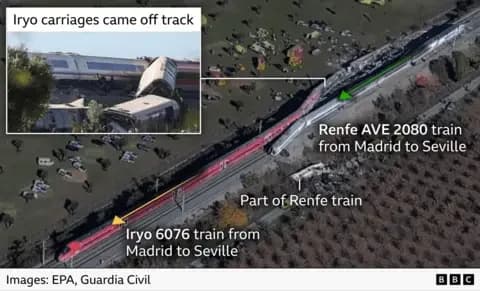
At least 68 people have been confirmed dead following a devastating high-speed train collision in central Spain. The accident occurred near the towns of Mora and Orgaz when a passenger train traveling from Madrid to Seville struck a stationary train on the tracks. Numerous others sustained various degrees of injury as emergency services rushed to the scene to conduct rescue operations and provide medical assistance to the survivors.
Preliminary investigations by Spanish authorities suggest the disaster was caused by a critical computer system error that was further compounded by human oversight. Survivors of the crash described scenes of total chaos and horror, with many passengers trapped within the mangled wreckage of the high-speed carriages. This collision now ranks as one of the deadliest rail accidents in Europe over the last decade, highlighting significant vulnerabilities in the technological and operational management of the high-speed network.
In the wake of the tragedy, the Spanish government has declared a period of national mourning to honor the victims. There are growing demands from both the public and political figures for an immediate and comprehensive review of the country's rail safety protocols to prevent such a failure from occurring again. Officials have pledged to conduct a transparent inquiry and hold those responsible for the technical lapses accountable as the nation grapples with the scale of the loss.